

Voices of Youth Q&A: Understanding Immigration Concerns in Kalamazoo
Amid rising nationwide immigration enforcement and fear, a Kalamazoo youth interviews El Concilio CEO Adrian Vazquez to explore how local organizations support immigrant families facing detention, uncertainty, and community-wide impacts.
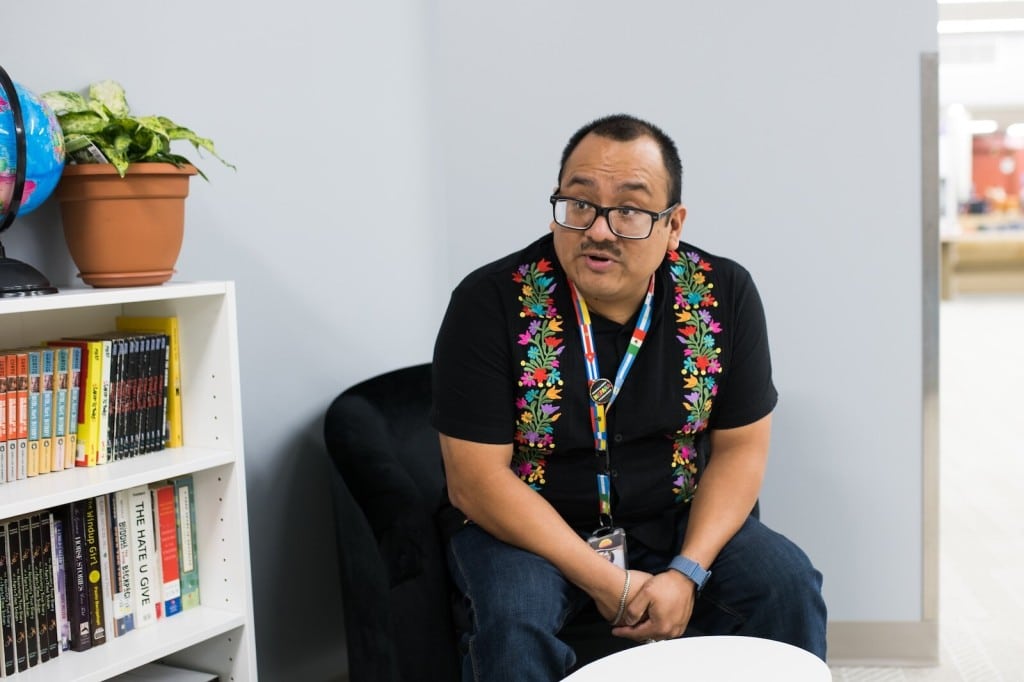
Photo: Fran Dwight
Editor’s Note: This interview was conducted by Gabrielle Mabin as part of the Winter 2026 Kalamazoo Voices of Youth Program. The program is a collaboration between Southwest Michigan Second Wave and KYD Network in partnership with the YMCA of Greater Kalamazoo, funded by the Stryker Johnston Foundation. The Voices of Youth Program is led by Earlene McMichael. Jane Parikh (writing) was the VOY Mentor.
KALAMAZOO, MI — Tensions over immigration reached a fever pitch recently with the high-profile public killings in January of Minneapolis residents Alex Pretti and Renee Nicole Good by federal agents, spurring protests across the country. Those aren’t the only deaths. In 2025, at least 32 people died in the custody of U.S. Immigration and Customs Enforcement (ICE) agents, the highest number since 2002, reports The Guardian.
The nationwide crackdown on undocumented immigrants made Kalamazoo Voices of Youth Writer Gabrielle Mabin determined to learn more about immigration enforcement. Undocumented persons are in a heightened state of fear as the federal government has abandoned its longstanding policies discouraging arrests in high-visibility places like schools, houses of worship, and hospitals.
Gabrielle especially wondered how Kalamazoo might prepare for possible ICE activity. To get answers, she spoke with Adrian Vazquez, chief executive officer of El Concilio Kalamazoo, a community organization that supports many immigrant families in Southwest Michigan. Vazquez shared how his organization helps families, what challenges the community faces, and what people should know.
He encouraged people to learn from local organizations and community leaders about how immigration policies affect real families. He explained that many immigrant families live with uncertainty and fear about whether they will be able to stay together.
Q: Can you introduce yourself and tell us your role at El Concilio?
A: My name is Adrian Vazquez, and I am the chief executive officer at El Concilio. Our organization works with immigrant families in the community, helping them access resources, information, and support.
Q: How does El Concilio help families who are affected by ICE?
A: When a family comes to our office, we first gather important information about the person who may have been detained, such as their full name, date of birth, and where they work. From there, we try to locate that person and find out where they may have been taken. At the same time, we support the family members who are left behind. We make sure they have access to food, clothing, and other basic needs. If there are children involved, we focus on making sure they are safe and supported while the situation is being figured out.
Q: How do you think ICE affects mental health and safety in the community?
A: It creates a lot of stress, anxiety, and fear. Families are worried about what could happen to their loved ones. Some people become afraid to go to work or even leave their homes. To help with this, we connect families with counselors. We have bilingual and culturally-aware counselors who can talk with people when they are ready.
Photo: Fran Dwight
Q: Do you work with any other organizations in Southwest Michigan?
A: Yes. We work with several organizations, including immigrant rights groups and faith-based organizations. Some churches and community groups partner with us to help educate the public and support families during difficult situations. We meet with these groups to plan events, share information, and coordinate support when families need help.
Q: Does El Concilio have a plan if ICE comes into Kalamazoo?
A: We try to prepare as much as possible, but it is difficult to say that anyone can be fully prepared. If there were large enforcement actions, it would affect many families. We do what we can to support families financially and connect them with resources, but situations like that can impact an entire community.
Q: Are there situations where ICE enforcement makes sense?
A: If someone has committed a serious crime, that is different. However, many people who are detained have not committed violent crimes. Many simply do not have legal immigration status. Not having documents is very different from committing serious criminal offenses. Many of these individuals are parents who work and have children in school.
Q: Do you think ICE has a positive or negative effect on the community?

A: Right now, it has created fear and distrust. Many families are worried about what could happen and feel uncertain about their future.
Q: Are other communities supporting immigrant families?
A: Yes. Many people from different backgrounds are speaking up because they believe everyone’s rights should be respected. We see support from different communities that believe families deserve fairness and dignity.
Q: What goes through your mind when you see ICE actions happening in other cities?
A: There are a lot of emotions. It can be frustrating and upsetting when families are separated or when people feel they are not being treated fairly. But we try to stay focused on supporting the community.
Q: What resources are available for families that people might know about?
A: There are preparedness guides available online that explain what families can do if they face an immigration situation. These guides help families gather important documents and make a plan ahead of time. Many of these resources are available in multiple languages.
Q: Do you feel prepared if ICE activity happens in Kalamazoo?
A: We try to be as prepared as possible. We work with community partners and encourage families to keep important documents ready, like birth certificates and passports. We do our best to support families, but the situation can always change.
Gabrielle Mabin, 14, is a freshman at Kalamazoo Central High School in Kalamazoo, Michigan. She likes speaking up and using her voice for issues that matter. In doing her interview with El Concilio’s Adrian Vazquez, she said it helped her understand how immigration issues affect families and communities. It also showed her how organizations like El Concilio try to support people during difficult situations. Talking to a community leader also helped her see how important it is to ask questions, learn from others, and share information so people can better understand what is happening around them.
Author

Related Articles
Distance isn’t a barrier to supporting LGBTQ youth in Battle Creek, Vermontville, and beyond
Christine Terpening founded “I’ll Be Your Rock” in Vermontville to create supportive spaces for LGBTQ youth, and her organization is now expanding to rural communities across Michigan and beyond.
Tribal Officers go undercover to combat human trafficking along I-94 corridor
The Nottawaseppi Band of the Huron Potawatomi received a $900,000 federal grant to combat human trafficking in Indian Country through undercover operations, victim-centered interventions, and collaborative efforts with local law enforcement along Michigan’s I-94 corridor.
Packed Kalamazoo forum grapples with fear, rights, and how to protect neighbors
Kalamazoo residents packed a public forum to learn their rights, discuss safety, and organize community response amid growing fears of ICE activity.