‘We go where they are’: Lucinda Stinson’s vision for a more connected Rotary
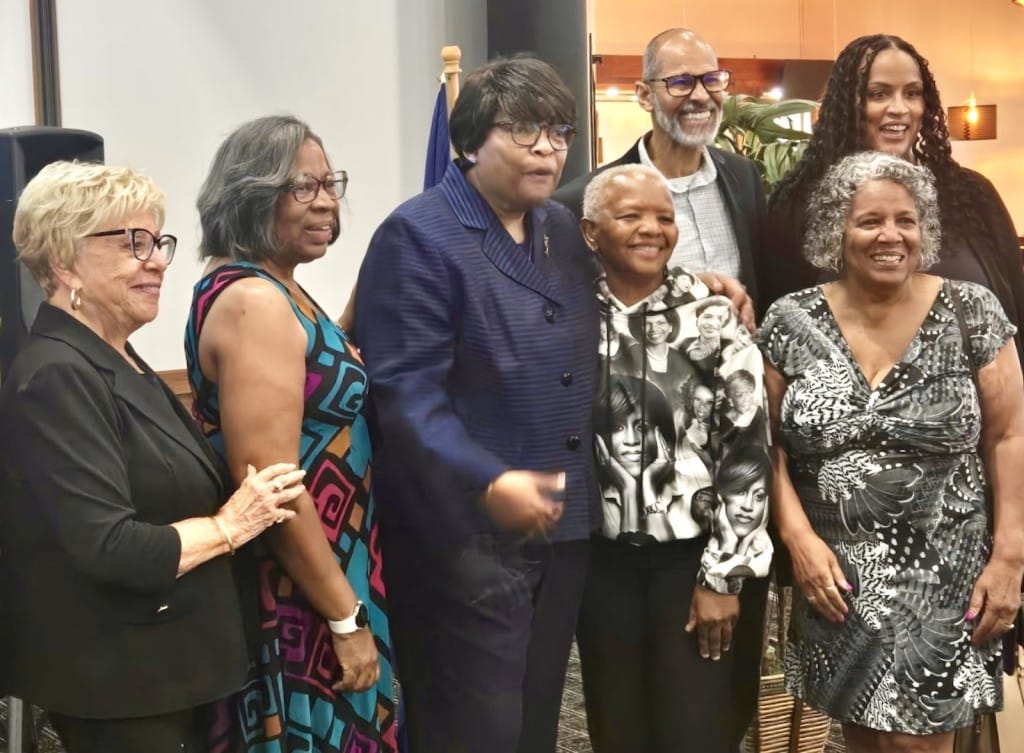
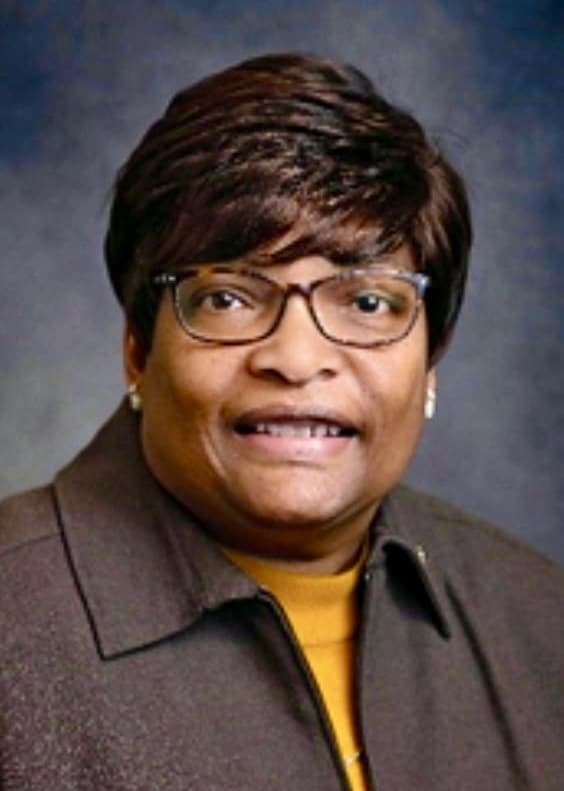
Lucinda Stinson, the new president of the Rotary Club of Kalamazoo, aims to broaden the organization’s community outreach, increase its diversity and engage members more directly with people and neighborhoods in need.
Editor’s Note: This story is part of Momentum: The people and companies shaping what’s next, a weekly series that explores new ventures, founder support, and the resources powering entrepreneurship and small businesses across seven counties in Southwest Michigan. This project is sponsored by Southwest Michigan First.
KALAMAZOO, MI — Entrepreneur, investor, and author Tim Fargo has said, “Leadership is service, not position.”
Scholar and author Warren Bennis says, “Leadership is the capacity to translate vision into reality.”
If those things are true, the new president of the Rotary Club of Kalamazoo has the potential to take the community service organization to new places.
“When I first went to Rotary 20 years ago, it wasn’t an environment I wanted to be in,” says Lucinda Stinson, a lifelong Kalamazoo resident who was elected to lead the 111-year-old chapter of the organization of business professionals.
Asked why she wants to lead the organization, she says, “Truthfully, I don’t think it was a want, more than a need.”
Many of its members were older white men who wore suits and wrote checks to benefit community projects, she says. “Fast-forward 20 years,” she says, “I go to a meeting, and I know a good number of the people that are there. … I’m in a work group where they’re talking about their goals for next year.”
She says four men were talking about DEI (diversity, equity, and inclusion). “And the Lord spoke to me and said, ‘What do you think they know about DEI?’” But she says the Lord also asked, “What do you think you can bring to this organization?”
That helped motivate her to become more involved. Stinson, who teaches a DEI course at Western Michigan University, says that despite recent efforts by some to dismiss the need for businesses and organizations to pursue the concept, “We will never be away from DEI because we’re never going to be the same people.”
Past Rotary president Sidney Ellis says he suggested she try the top leadership role about three years ago and didn’t realize until this year that she would be the first African-American woman to lead the local club.
“She jumped right in as a Rotarian,” says Ellis, who is now executive director of Ministry with Community in Kalamazoo. “She was dedicated. She was showing up weekly and whatever she got involved in … she did what she said she was going to do.”
In keeping with club rules, Stinson served as president-elect of the club for a year. And Ellis, who in 2022 became the organization’s first African-American president, says, “I didn’t think about her being the first Black woman until her year was about to start. … What I saw in her were the qualities that we needed in a president of Rotary.”
Considering the perspective she has the potential to provide as a Black woman, he says, “That’s icing on the cake.”
“She very much knows what she’s getting into,” says Dann Sytsma, the immediate past president of the club. “She’s been a member long enough that she’s well aware. And then she’s a very strong proponent for correct systems and policies, and having things written down, and having a process that is clear to everybody.”
He also says, “She communicates well, which is very critical because everybody is volunteering.”
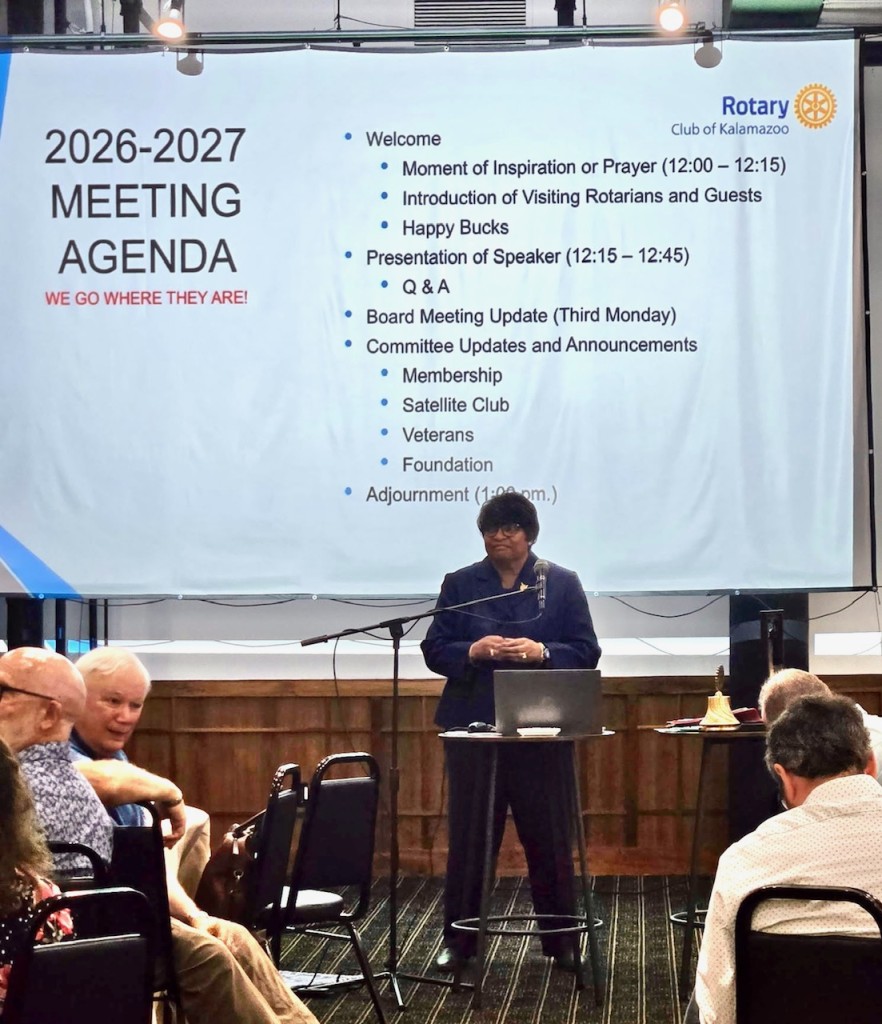
“My motto for the year is ‘We go where they are,'” Stinson says.
As 2026 Rotary president, she says she wants members to do a lot more community outreach — inspiring them to spend more time visiting with and listening to people who need help.
“When I say we go where they are,” she says, “we go into the community. We go into different communities. We seek out people who need our assistance. We sit down and listen to people and hear their needs. We just don’t sit in the club every Monday, eat lunch, hear a presentation, and go on our merry way. We need to get involved.”
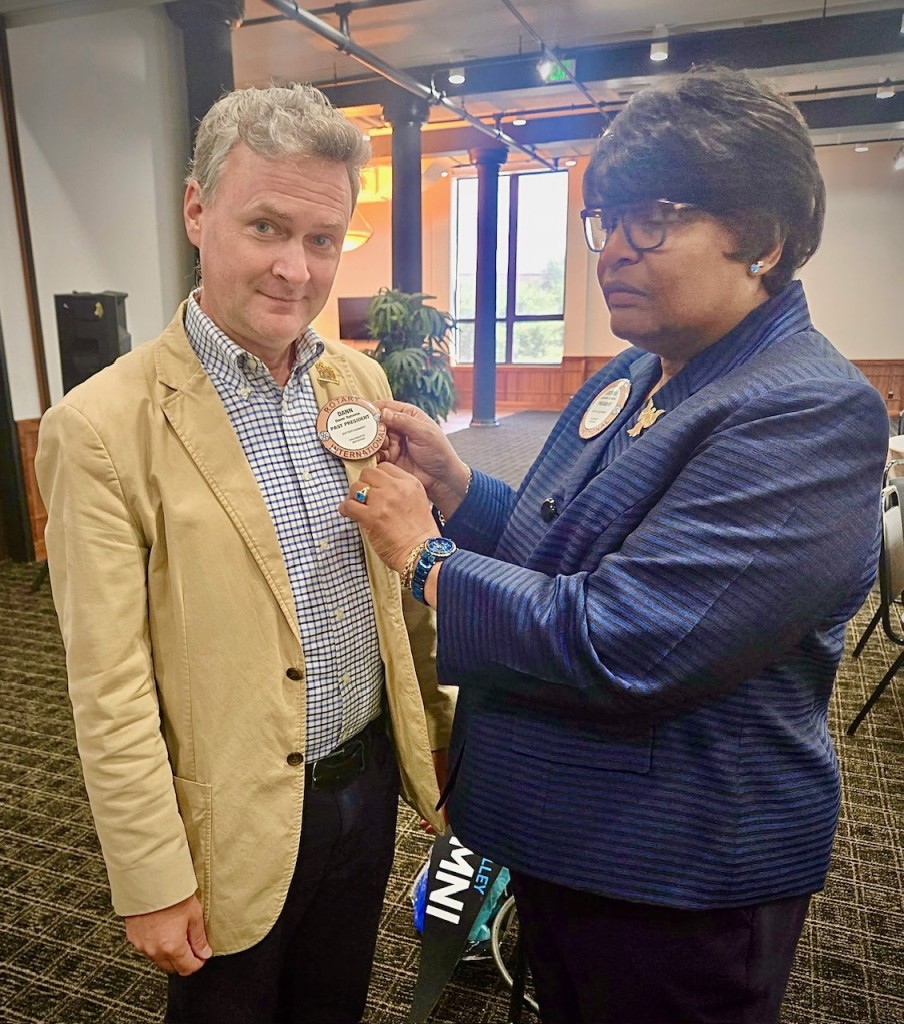
Along with that, she hopes to increase the organization’s membership and help it better reflect the ethnic diversity of the wider community. The club has a roster of more than 200 members (about 116 active), and typically sees 40 to 50 members at its weekly meetings. Stinson says she hopes to have some of the weekly gatherings in other locations to bring the Rotary in contact with more people.
Stinson, 69, has a wealth of administrative and leadership experience that should help her make effective use of busy professionals’ time. A lifelong resident of the area, she has relationships with many local people and experience serving on the boards of several local organizations. She has more than 45 years of experience in the local health care industry, starting in the early 1970s as a registered respiratory therapist. She spent more than 25 years as a clinician helping to meld programs at Borgess Medical Center (now Beacon Kalamazoo) and Bronson Methodist Hospital.
She is a former executive director of the Kalamazoo County Health Plan, the former director of administrative services for the Family Health Center of Kalamazoo, the deputy director of Kalamazoo County Health and Community Services, an interim executive director of Kalamazoo Valley Habitat for Humanity, the current CEO of medical equipment provider Lending Hands of Michigan, and an adjunct professor in the College of Health & Human Services at Western Michigan University.
At the same time, she is chairperson of the Kalamazoo Valley Community College Board of Trustees, chairperson of the Hospital Hospitality House, and a member of the Board of Advisors for the Kalamazoo Valley Museum.
A bout with cancer several years ago caused her to consider ratcheting down her involvements. But the winds of community service picked up again more than nine years ago when she was recruited to lead Lending Hands, a nonprofit organization that acquires and lends durable home medical equipment to people who may not otherwise be able to afford it. It is an all-volunteer operation that is based in Portage but serves six counties in Southwest Michigan. She made a two-year commitment to that organization but continues there.
“This is my retirement job,” she says with a laugh. “I committed to two years, and somehow that two turned into 10.”
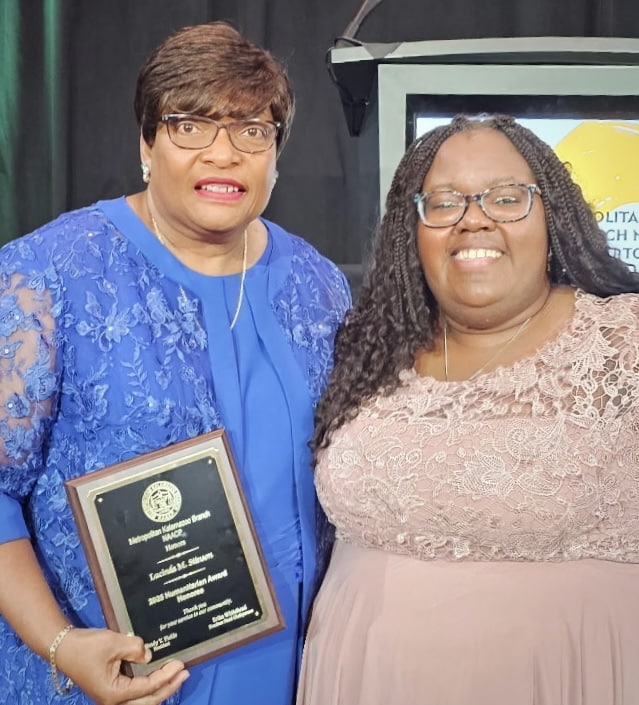
For her many community involvements and contributions, Stinson was a winner of the 2025 Humanitarian Award, presented by the Metropolitan Kalamazoo Branch of the NAACP.
She admits to having a heart for service, nurtured by her parents, Willie and Lucile Stinson. They taught her: “When you put your foot in the room, let them know you’re there.” She says that refers to doing something productive to help the people around you.
Stinson’s parents operated the first Black-owned grocery store in Kalamazoo’s Northside Neighborhood. The North Burdick Grocery & Market operated for about 25 years at 1907 N. Burdick St. It closed in 1970, a couple of years after the death of Willie Stinson. Lucinda was an only child who worked in the store (counting change at age 5). She says she will continue to work “as long as God gives me strength, and as long as my body continues to work, and my brain is OK.”
She says her parents took IOUs from many of the family men who had migrated from the South to take jobs at paper mills here. She says her father died with a shirt pocket full of IOUs. But that was a lesson learned in community service, she says.
The Rotary continues to offer opportunities to serve. It has several regular projects, including a springtime reading program in which members tutor elementary school students, an annual riverfront clean-up program, and a fun, team-building, corporate Olympics-type program called Oddlympics. Stinson hopes to expand a home-winterization program that the Rotary has done for the past six years in Kalamazoo’s Northside Neighborhood. Called Kudos, she says she’d like to see it offered to help people whose homes are not properly insulated on the city’s Eastside, Southside and Westside.
Ellis says, “We’re a community organization, and if you want to be more involved in the community, you could do it through Rotary.” In the meantime, its members are engaged each week by informative speakers — educators, politicians, entrepreneurs, civic leaders, business leaders, nonprofit leaders, and others. Members meet at noon each Monday at the Kalamazoo City Centre Building.
Stinson says that over the years Rotarians have gotten used to writing checks to help community causes more often than helping people face-to-face. And its membership doesn’t reflect the diversity that she sees in the community. She says she believes there have been pockets of Black and other minority business people and professionals who “had our heads down, trying to make it in our careers.” But more needs to be done to recruit them into the Rotary. She didn’t have a statistic for minority involvement in the club, but estimated that there may be “two handfuls” of African-American, Indian and Hispanic members.
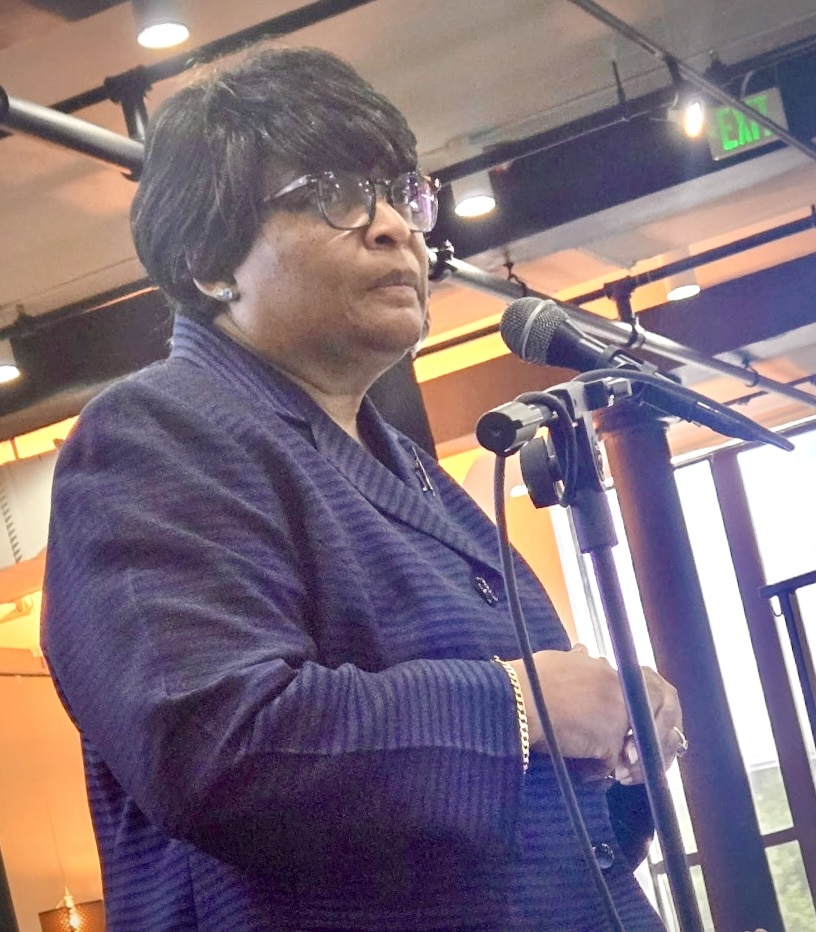
“Rotary has a bit of an identity crisis going on right now,” says Sytsma, who is also the owner of Crawlspace Comedy Theatre. “It’s not sure if it wants to be the Peace Corps (trying to solve problems everywhere) or a BNI-style (business networking) group. So some people join it for one reason, and some people join it for the other. And then everybody feels like the reason they joined Rotary is the best reason. So they’re always kind of fighting for that.”
He says Stinson has a sharp focus on helping the local organization gain a larger presence in the community and leveraging members’ influence to make the community better. “I personally think that’s the best possible future for Rotary,” he says.
Of Rotarians and DEI, Sytsma says he thinks they want diversity, equity and inclusion, “but they don’t know what it looks like.”
“I would say most people are extremely excited about it,” he says. “And there’s a collection of people that maybe are a little lukewarm about it. But nobody is against it. “
He says he thinks members who are lukewarm about it may be that way because it means change. He says, “It means their club is going to start looking a little different than what it’s looked like in the past. And change is just hard for some people.”
Stinson, who conducted DEI workshops for area Rotary clubs two years ago, explains that it is about more than race or ethnicity. “When you don’t look at it from a color perspective — when you look at it from a people perspective — we’re always going to have people that are disadvantaged,” she says.
Stinson is a mother with one adult daughter. Lucretia Jane Stinson is a professional flautist who performs with the Kalamazoo Philharmonia, as well as at Mt. Zion Baptist Church.
Of people that she says she has overheard talking about DEI, Stinson asks, “Where is their grounding? What do they know about being denied services or access? Or having their zip code marginalized? What do they know about rejection? What do they know about having mortgage rates higher for African-Americans than they are for Caucasians? What do they know about being denied because of the color of their skin or maybe their accent? What do they know about treating people respectfully who are in wheelchairs? Or who have mobility issues? What do they know about veterans that are coming back (from military service) with PTSD and are living on the streets? What do they know about that? That’s where my concern was.”
Why did she choose to take on another community leadership role?
“I did a lot of praying about it and talked to a couple of people,” says Stinson, who is a longtime member of Mt. Zion church. Ultimately, she says it seemed like the right thing to do. She says, “It’s very simple. Every morning I ask God to order my steps and direct my pathway.”
Asked what makes Stinson a good fit for the position, Ellis says it’s her dedication to the Rotary programs she has tackled.
“Rotary is a selfless organization,” he says. “You’re here for the community. Your thought process should be ‘What can I do for the community?’ Not just what can I do for the Rotary. But what can I do for the community through Rotary? … I recognized that this was a person who is taking this seriously. This is not just some networking group (to her). It’s not just something to put on your resume. This is something serious. And that’s how she took it.”
Author

Related Articles
Community Land Trusts in Portage and elsewhere help residents become homeowners affordably
As the statewide housing crisis continues, communities of all sizes are looking at how to increase affordable housing options for current and future residents. In Kalamazoo County, the Portage Community Land Trust is helping residents become homeowners affordably with their new workforce housing development, Stanwood Crossings.
Small Business Social Hours foster success through face-to-face connection
Why face-to-face networking opportunities are even more important for small businesses and entrepreneurs.
CDFIs investments in childcare allows daycares like Detroit’s Lil Love Bugs to further invest in children’s futures
Childcare is not a family issue, but a workforce issue. Members of the MI CDFI Coalition showcase how investing in quality, affordable childcare and early childhood education positively impacts the entire community.