Voices of Youth: ‘You’re not really learning’ — AI raises concerns about cheating and critical thinking
High school students and educators in Kalamazoo warn that growing reliance on artificial intelligence tools in classrooms may undermine critical thinking, encourage cheating, and impact creativity and mental health.
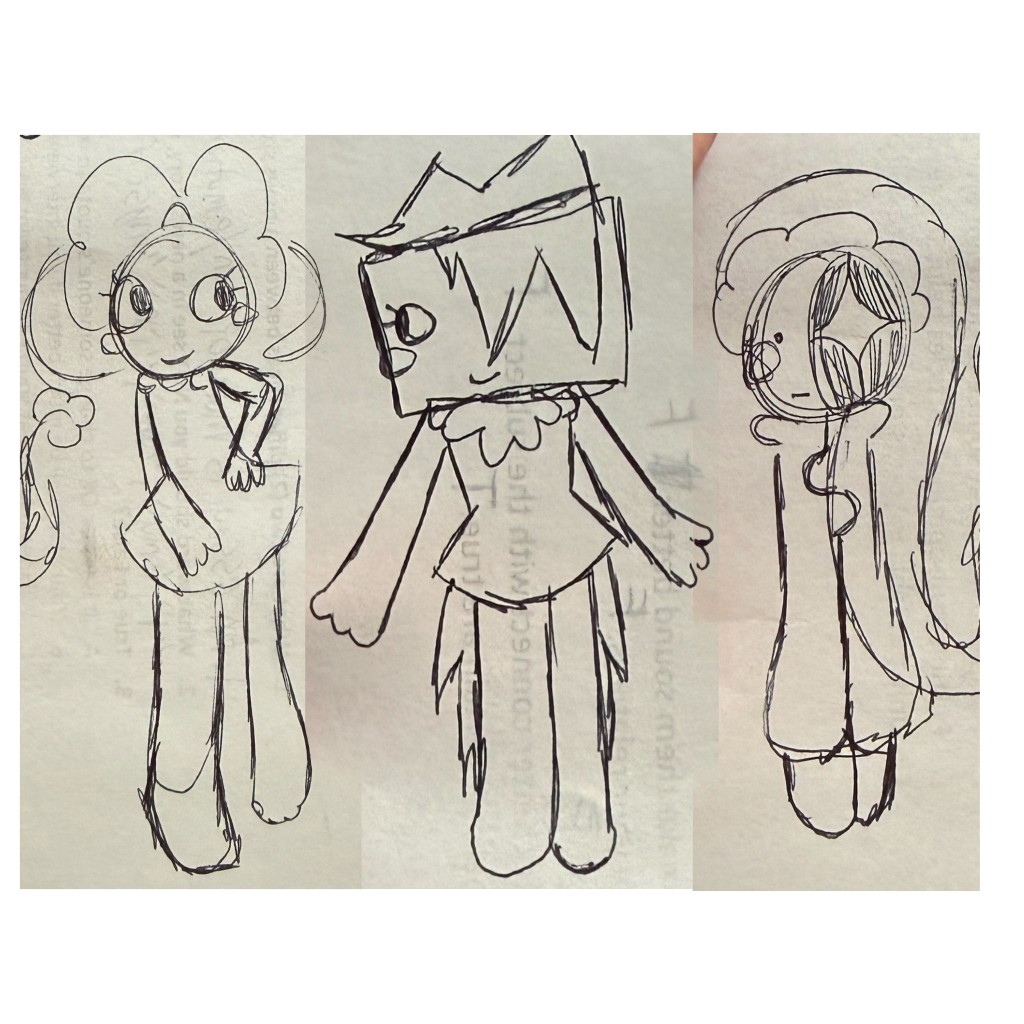
Editor’s Note: Emma Troyer reported this story, and Savannah Scheffers created the accompanying artwork as part of the Winter 2026 Kalamazoo Voices of Youth Program. The program is a collaboration between Southwest Michigan Second Wave and KYD Network in partnership with the YMCA of Greater Kalamazoo, funded by the Stryker Johnston Foundation. The Voices of Youth Program is led by Earlene McMichael. Al Jones (writing) and Casey Grooten (art) were the VOY mentors.
KALAMAZOO, MI – Students sit in clusters inside a high school classroom. Jokes and laughter fill the air. They don’t seem to be thinking about the assignment they were just given, or the one that will be due before the end of class.
There is very little deep thinking. There is not much more than a glance at an assignment to interpret its meaning. Most of the students know that with a few simple clicks on their Chromebooks, the work will get done. After all, who would worry when everyone has easy access to artificial intelligence?
“You take a picture (of the schoolwork),” says Z’ryan Roberts, 15, of Kalamazoo. “Put it in, and it like tells you the answer.”
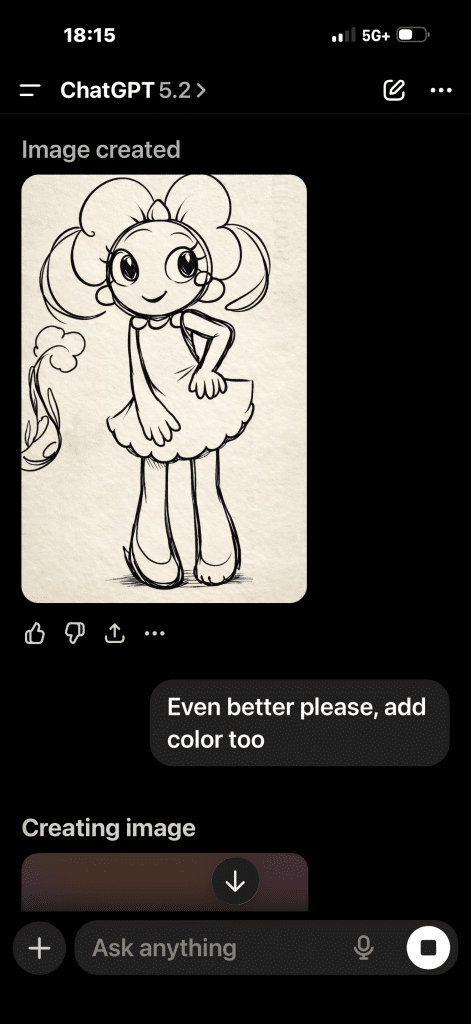
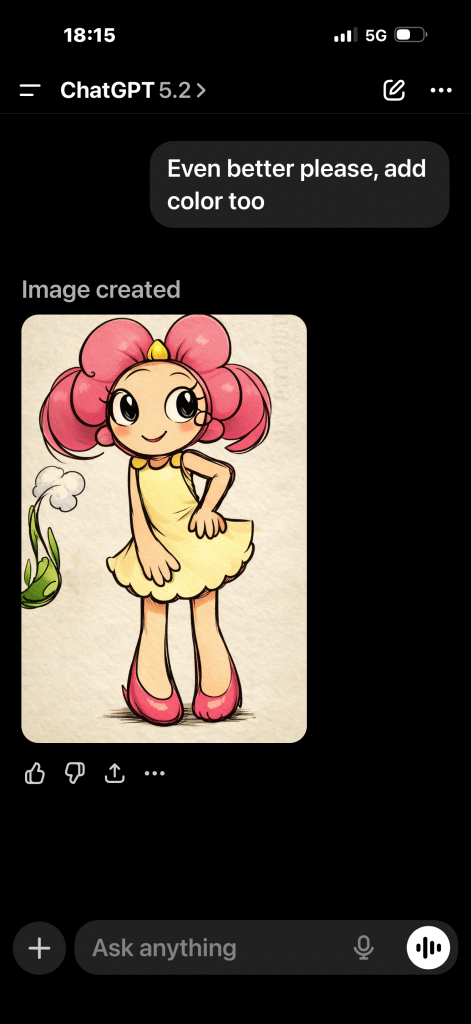
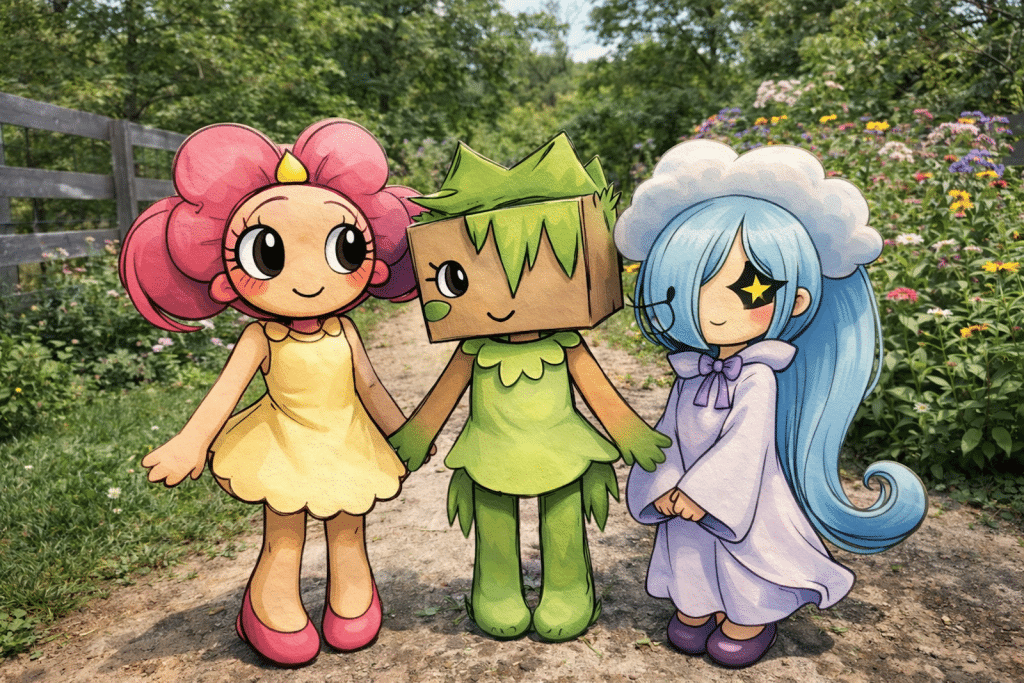
The beginning of the AI generation. Art Lead, Casey Grooten, purposely uses language like “better”, rather than giving explicit instructions to the AI.
He says he’s not allowed to use AI for the remote courses he takes online. But he says he has used it in the past. Asked if AI is dumbing people down, he says, “It really is, actually, a lot.”
Does it do the work for him?
“Yeah,” he says, “because it’s just giving you the answer. You’re not really learning anything.”
But while using advanced computers to solve problems is convenient for creating artwork, translating languages, screening data, and responding to almost any question, some educators say it may come at a high cost to students who don’t realize they could be cheating themselves by taking shortcuts in the learning process. They say it also comes at a high cost to creative people, whose writing, music, and artwork can be stolen and used without them getting credit or paid.
AI can also be used to shift people’s political viewpoints with such things as AI-generated rage bait. And it can become an addiction for people who rely on it in place of personal relationships.
“Some of the students I’ve talked with recognize that it’s easy,” says Tama Salisbury, assistant principal at Portage Central High School. “It’s very easy to go there and just get an answer very quickly, and because of that, it might create an overreliance on the tools to do thinking for you. And so, I think that would be a downside if you are not self-aware and able to be disciplined with AI and its tools.”
If students aren’t thinking critically before they use it, “that could turn into some problems that you weren’t expecting,” she says. So, she says, she thinks AI creates both problems and opportunities.
The opportunities, she says, are to learn to say no to cheating and stealing other people’s work and “to help create that self-discipline in a media-rich world.”
“The drawbacks are the overreliance,” Salisbury says. “And the problems are for those students who are not self-disciplined — the concern over developing appropriate critical-thinking skills, not losing your human advantage, and not necessarily evaluating the material that comes back at you.”
Over the last few years, AI seems to have taken over the internet in such a significant way that it’s clear that whatever is in the future, AI will be a part of it. With AI, what comes to mind? If it’s ChatGPT or Sora AI, both fall into a category called generative AI. Generative AI is able to hold a conversation, answer questions, write stories, and make images and videos with any description you type. It creates new content from other sources made by people who, more often than not, do not consent to it.
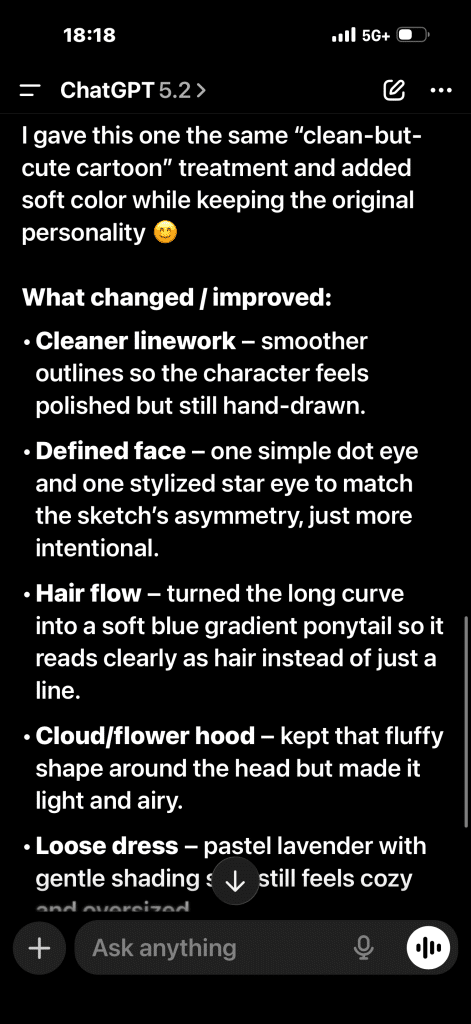
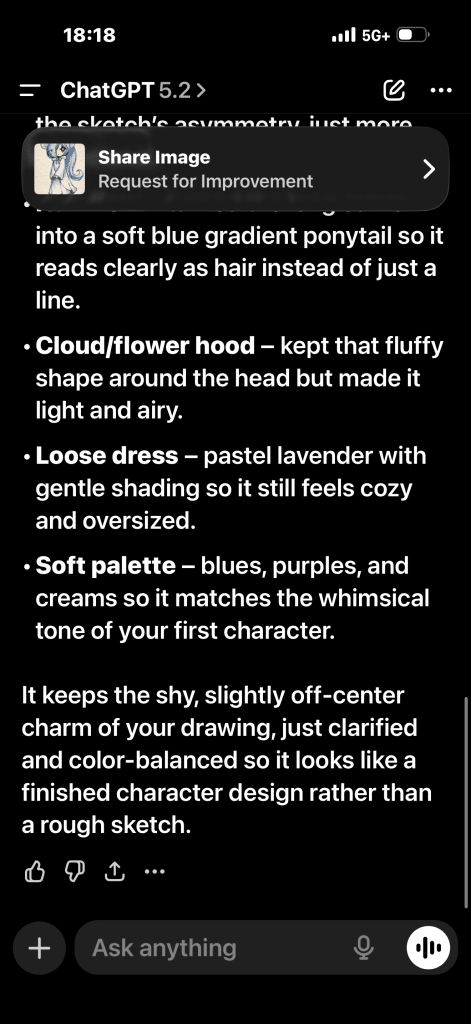
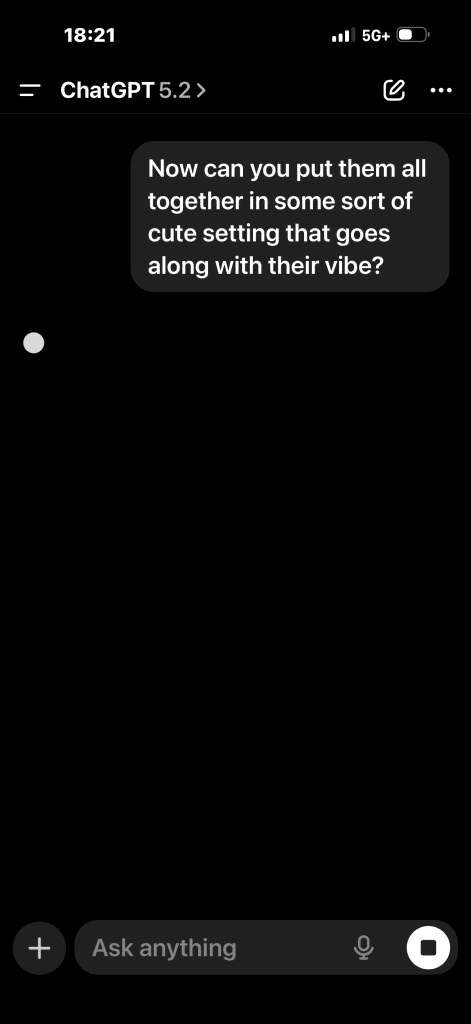
Chat GPT explains (without being prompted to) the rationale used when creating the images. Grooten again asks for more.
Not only are high school students using it, but youngsters are growing up with it, and adults are putting it to use in their jobs.
Charlene Boyer Lewis, professor of history and director of American studies at Kalamazoo College, says AI allows her to find specific pieces of data that she uses in her lessons and in the history books she has written. But when she is asked if AI is positively or negatively affecting her life, she says: “Nothing but negative.”
She has had her own work stolen and offered on an AI platform without any credit or compensation. The first of her three books, titled “Ladies and Gentlemen on Display: Planter Society at Virginia Springs, 1790-1860,” was downloaded, not to mention all four of her husband’s books. They were also used without credit. He is also a professor of history.
Their books were used to provide information to people who use AI, allowing them to write essays. She says all of her colleagues have had their research stolen and offered to the public on an AI platform. And despite stern warnings to her students that using AI will not be tolerated in the writing they turn in, she says some still use it to cheat.
“I have colleagues who are retiring because they no longer want to do this. AI has ruined why they became a professor, ruined why they became a partner in student learning. AI is ruining all of that.” — Charlene Boyer Lewis, Kalamazoo College Professor
Boyer Lewis says using AI to cheat these days is worse than cheating in the past, “because it’s not just cheating. You’re not thinking. And, if I can’t convince you to want to learn and want to think on your own, then what am I doing? What are we doing in college? What are we doing in high school?”
She says that if a person doesn’t want to read a novel — or write a paper based on primary sources — and become a thinking human being, she doesn’t know how to help them.
“I became a professor to guide students and learning,” Boyer Lewis says. “That’s why all my colleagues became professors. We love teaching. We love being in the classroom. We love guiding students through their learning. AI is stopping us at every single point of doing that. … I have colleagues who are retiring because they no longer want to do this. AI has ruined why they became a professor, ruined why they became a partner in student learning. AI is ruining all of that.”
The access that artificial intelligence provides to other people’s work and the access people have to it may impact some people’s mental health. For example, while some use it to do their work for them, others use it to chat as if they were talking to a friend, depending on it for comfort instead of a human being with real emotions.
Portage Central High School’s Salisbury, the assistant principal, says, “Critical thinking, empathy, and compassion can’t be replicated by a machine.” Yet, she says, many people have turned to AI instead of real people for interactions.
A study released in 2025 by the Brown University School of Public Health, Harvard Medical School, and nonprofit research group RAND found that one in eight American adolescents and young adults is turning to AI chatbots for advice on mental health problems. The study included 1,056 participants aged 12 to 21.
According to a report by Brown University, the study was done at a time when OpenAI was facing seven lawsuits alleging that ChatGPT drove users to delusions and suicide. Chatbots were given statements simulating people who were suicidal and who were experiencing mania and hallucinations. They were found to sometimes encourage inappropriate actions and agreed with the delusions that were given. Despite that, an estimated 1.2 million of the 800 million weekly ChatGPT users claim to have an “emotional attachment” with the app, according to data released by OpenAI in October of 2025.
As use of AI grows, some people fear it will become harder and harder to tell the difference between content generated by a computer and that by a human, especially if it continues to take from real artwork and photos without their makers’ permission and, in some cases, remove the watermark and signatures that are embossed on the images.
So, overall, it would appear that AI’s impact on the world has to be watched. But, with discretion and in moderation, it can be used for good.

Savannah Scheffers is a 16-year-old sophomore attending Schoolcraft High School and the Kalamazoo Area Math and Science Center. Savannah enjoys painting, reading, and creating collages. Her favorite subjects in school are History and English. This is her third time creating art for Voices of Youth. She participates in the Voices of Youth cohort because she believes that art has the power to unite people around a common cause.
Artist Statement: “When reflecting on the relationship between humanity and art history, hands remain one of the most connecting factors between the now and the then. Hands have the ability to physically connect and disconnect people: hands interlock with one another, or grasp or push one another away. Looking back, one of the first examples of art is handprints of outstretched hands on cave walls. In paintings, hands are often avoided because of how difficult they are to create accurately. Artificial Intelligence often disfigures or deforms hands when generating them. AI exists as a tool, but unlike tools of the past, it renders itself as exponentially powerful; existing less as a tool and more as a replacement.”
Author

Related Articles
Planet Z: Western Michigan University students voice concerns over Asylum Lake Preserve’s future
Many underestimate how important wild, natural places like the Asylum Lake Preserve are to nearby college students. The potential transfer of the preserve raises questions and concerns about its stewardship and transparency.

Voices of Youth: Six ways to improve climate change education in Kalamazoo Public Schools’ high schools
According to a recent survey, many Kalamazoo Public Schools students feel undereducated about climate change and want more comprehensive instruction that covers its causes, impacts, and solutions.
Voices of Youth: Learning to live with artificial intelligence requires some deep thinking
AI’s growing use in schools raises concerns about student over-reliance, critical thinking loss, academic integrity, privacy risks, and environmental impact while offering efficiency and accessibility benefits.