Serenity House closes, but pilot helps five families find permanent homes
Kalamazoo Housing Advocates’ Serenity House helped five families secure permanent housing before closing due to unresolved safety issues and an unresponsive property owner, prompting plans for a new transitional housing program.
A Way Home — Housing Solutions: This story is part of Southwest Michigan Second Wave’s series on solutions to homelessness and ways to increase affordable housing. It is made possible by a coalition of funders, including Kalamazoo County, the ENNA Foundation, and Kalamazoo County Land Bank.
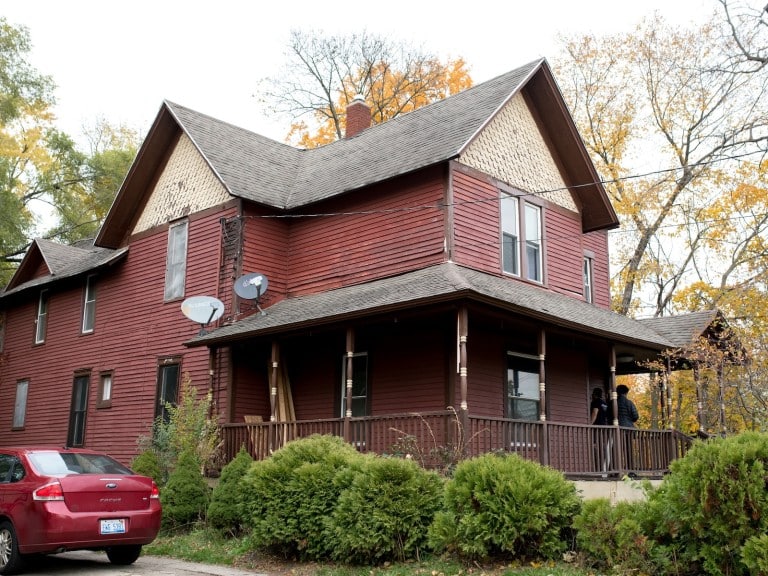
The good news is, Serenity House moved five of eight families into new homes during the six months it was open.
The bad news is, Serenity House had to close in July due to its absentee owner failing to fix major issues required for City certification.
Last November, 2026, the old boarding house at 531 Bryant in the Edison Neighborhood became the site of a Kalamazoo Housing Advocates transitional housing program.
KHA says that the pilot project proved it was possible to get unhoused families into a temporary home, and then move them onto more stable living situations.
But issues with the house and its owner were too difficult to overcome. Lessons were learned, KHA Executive Director Sarah Cain and Director of Programs Marla LeMae say.
KHA is shopping around for another property to launch a similar program. This time, “We won’t be rushed,” Cain says. “We will find the right location, the right type of housing, and hopefully not a 150-year-old home that has mystery — secrets that come out in their own time,” she says with a laugh.
No mystery
The house on Bryant has 11 bedrooms, multiple baths, a large kitchen, dining area and living room.
Cain says they saw it had “So much character!” And with all those bedrooms, “what else are you going to do with it?”
After they’d decided on using it for their program, the house’s mysteries became apparent. It had a leaking roof, a malfunctioning furnace, a decrepit electrical system, old plumbing, and other problems.
KHA and many other organizations, local businesses, and volunteers donated time, skills, goods, and money to fix up the house to make it ready to help people who had nowhere else to go.
But City inspectors found major problems that needed to be fixed ASAP. KHA passed inspection results to their property management, who passed it to the property owner. The owner failed to invest in the needed fixes.
His message to KHA, LeMae says, was “You can go ahead.” Translation — KHA was free to complete the fixes, on the house that he owned, themselves.
Initially, property management company Lukeman Group had approached KHA about the house, and suggested its 11 rooms could be used for a transitional housing program. KHA has had a long relationship with Lukeman, who has worked to find property to house KHA clients.
Madison Lukeman, Associate Broker, writes in a statement about 531 Bryant, “Sarah Cain and I have worked together in housing for a long time. I am grateful to see the very hands-on case management that KHA provides to the participants they chose to work with.”

The house’s owner had purchased the property in 2022, Lukeman writes, “the peak of the post-COVID real estate market, and had a desire to maintain an unrealistic return on investment.”
A Kalamazoo County parcel search shows Robert Rhodes as current owner of the property. We tracked down someone in Detroit real estate with that name, but could not confirm it was the same person. Cain and LeMae say they think Rhodes is in Detroit, but Lukeman says her company has him under a North Carolina address.
In any case, Second Wave did not receive, and was unable to find, contact information for Rhodes.
Cain and LeMae say they felt pressure from the owner to quickly fill the rooms, and to send him $6,500 a month for the house. “He wanted to start making money on it because he was saying he was losing money every day,” Cain says.
They figured the house had been empty for the three years under his ownership.
Since Serenity House was meant to be transitional, the goal wasn’t to keep the house packed with long-term tenants. The owner was “applying a lot of pressure to us and to the Lukeman group to get this house filled. And we weren’t going to just put bodies in rooms. We wanted it to be safe and secure,” LeMae says.
City inspectors refused to certify until issues were resolved, but they “gave multiple extensions” for the owner to do major repairs, Cain says. KHA found licensed contractors and got estimates, which they passed along to the owner. Some companies offered discounts.
Lukeman Group pulled out of the project in June. The owner’s demands for rent, plus the condition of the house, “led to terminating our management contract with the owner of the property. We connected the owner and KHA directly together, thus taking out the expense of a management company, in hopes that the efforts of Serenity House would continue. I understand that effort couldn’t be met,” Lukeman writes.
KHA is not in the business of property management, Cain points out.
When Lukeman pulled out, the City reached out to KHA to set a deadline for repairs.
“We’re not licensed brokers here,” Cain says. “We’re just managing a social services program within the house,” she says.
Then, KHA received word that “We had to be out of the house by mid-July per the owner’s mandate.”
“It was an income property to (the owner). And for us, we were providing a service. And so because of that clash, it just never meshed,” LeMae says.
Lessons learned
The pilot program had staff on site weekdays, and on-call for weekends. Residents had to participate in classes on budgeting, paying rent, and saving for a future home. Recovery services were there for those with substance use issues, and tutoring for students.
It seemed to be working as it should, until KHA needed to abandon 531 Bryant.
There was no dramatic families-tossed-onto-the-sidewalk moment at the closing of Serenity House.
KHA had eight families — approximately 30 adults and children — who stayed in the 11 rooms over the seven months. Five families had moved on before the house was shuttered. KHA found the families more permanent housing, and they are enrolled in their housing stability program. “That’s a huge success rate,” Cain says.
The other three families had left the program before the closing. “There are always families that just aren’t ready,” Cain says. “And that’s what happened with these three different families. The living situation wasn’t right for them.”
LeMae adds, “They weren’t in a place in their lives where they were able to accept the help and services that were offered.”
Near the end, “We had to make some hard decisions,” Cain says. They were prepared to move in new families, but not if the house itself might not be safe.
The big lesson they learned is that everyone involved should share the same goals in an effort like this.
Cain says, “We’ve known that, just from our line of work. We just know that when you’re a landlord from outside of town, you’re not really invested in the community.”
KHA found that the Kalamazoo community was more than willing to invest in the program.
They wish to thank all for “the tremendous outpouring of volunteers, donors, just everybody coming to us saying, ‘how can we help? We want this to be successful. ” So we’re thankful for that, and we’re looking forward to that support on our next adventure with this kind of a project,” LeMae says.
“It’s hard to put a dollar amount on a lot of the work that was done” to improve the house, Caine says. “We got a lot of donated hours and donated items. The flooring was donated, and the person putting in the flooring donated their time. The community came out and helped us put beds together and curtains up.”
KHA staff put in work themselves, painting, cleaning and getting the house ready. “We got this done in a month and a half because we were working on their (the owner’s) timeline. In hindsight, if we were to do it over again, we would have said we need more time.”
They are currently planning a Serenity House II. “There are a couple of people in town that we’re in conversation with about some of their properties. And so there are some really good options out there. We just need to make sure that we’re launching it in the right way this time, taking our time,” Cain says.
LeMae adds, “We want to keep working with people in our community who want to make a difference, rather than someone who’s looking for an investment opportunity.”
Author

Related Articles

Community asked to unite to seek innovative solutions to challenges that lead to homelessness
More than 300 community members aturned out as Kalamazoo Community Foundation leadership challenged the community to unite to address the complex issues behind homelessness.

Blue Horizon Real Estate works to be part of the solution to the affordable housing shortage
Marissa Harrington, founder of Blue Horizon Real Estate, advocates for breaking down communication silos among Kalamazoo’s housing stakeholders to address systemic barriers to affordable homeownership.
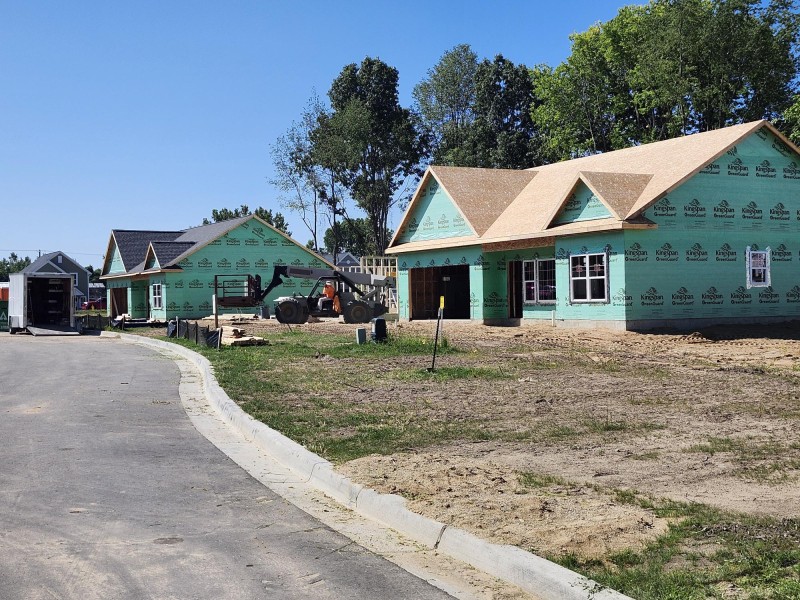
Community Land Trusts in Portage and elsewhere help residents become homeowners affordably
As the statewide housing crisis continues, communities of all sizes are looking at how to increase affordable housing options for current and future residents. In Kalamazoo County, the Portage Community Land Trust is helping residents become homeowners affordably with their new workforce housing development, Stanwood Crossings.