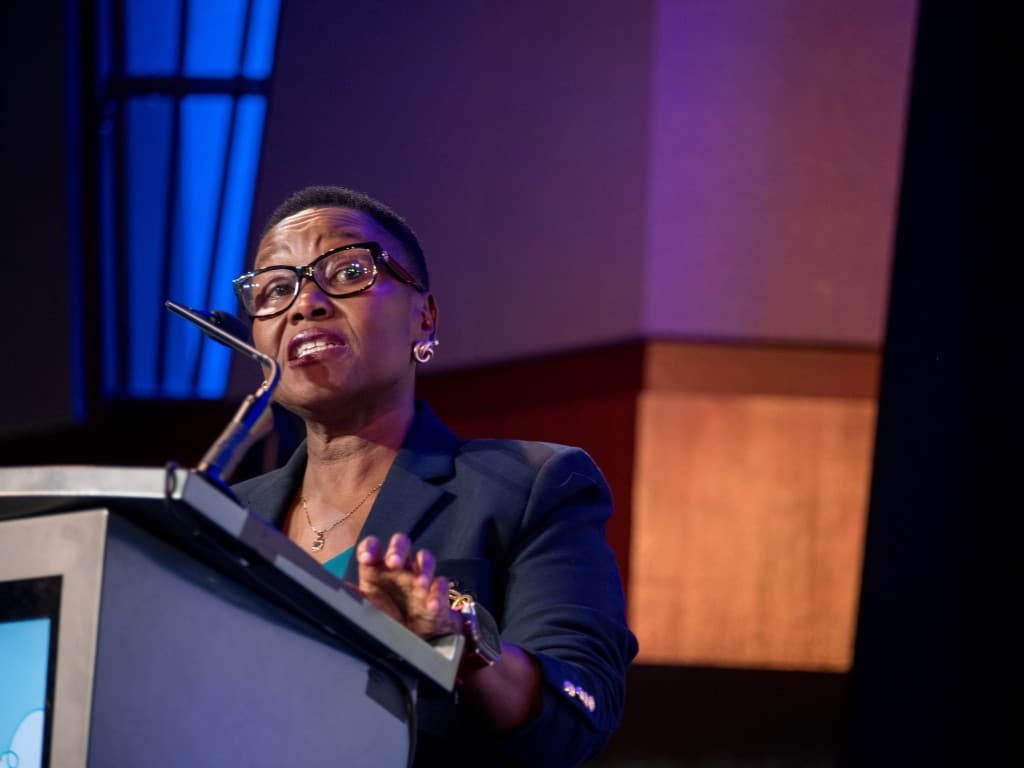
“When we see residents experiencing homelessness, it can be easy to make an assumption about how they got here. What if we asked instead, ‘What happened to my neighbor’s life that made housing no longer possible for them?’“
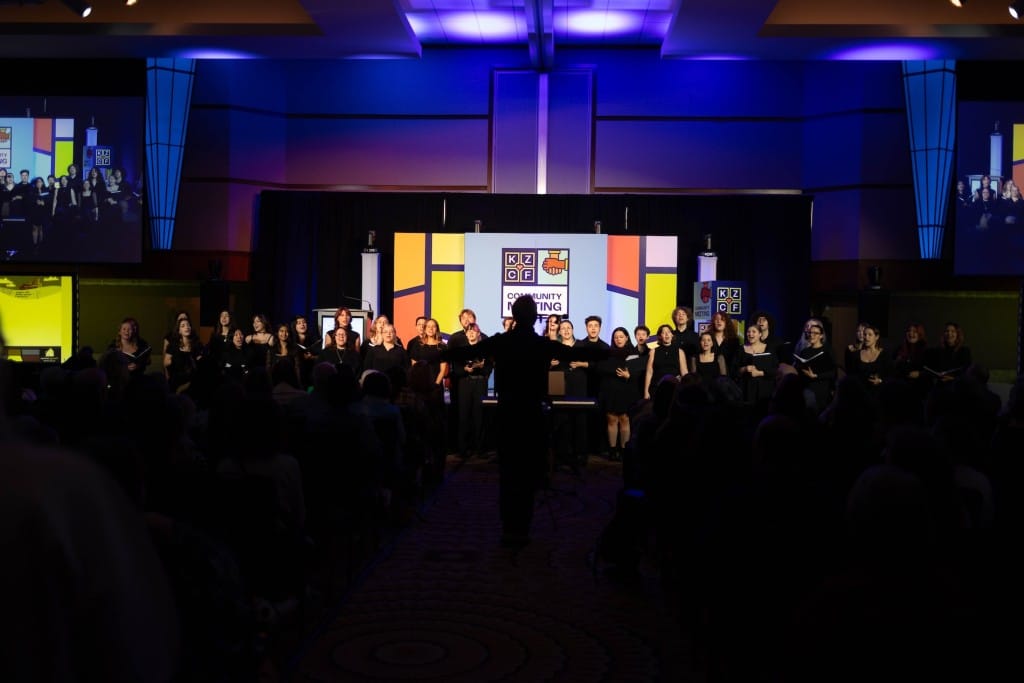
The question posed by Dr. Grace Lubwama, President and CEO of the Kalamazoo Community Foundation, was one of many thought-provoking moments of the 2026 Community Meeting in the Radisson Hotel ballroom on Oct. 6, an event that asked the audience to consider the human side to issues surrounding how people become unhoused.
From the selection of the keynote speaker — Stephanie Land, author of “Maid: Hard Work, Low Pay, and a Mother’s Will to Survive,” a memoir about her struggle with poverty, low-paid work, and homelessness — to the exhibit of photography and words from local homeless individuals gathered by the WMed Street Medicine team, the evening focused on the dignity and humanity of those often dismissed once they become homeless.
More than 300 community members and heads of organizations that work with the unhoused turned out as Community Foundation leadership challenged the community to unite to address this complex issue. The foundation plans to convene conversations that will lead to subsequent action that will “turn our concern into a shared commitment to solutions for our community, for our neighbors and for our Kalamazoo,” Lubwama said. The vision is “an equitable Kalamazoo County where every resident has a safe home and loves where they live.”
Lubwama framed the challenge, saying, “Today, homelessness is visible throughout our community. It’s shaped by challenges like income inequalities, discrimination, systemic racism, domestic violence, mental health needs, and limited access to services like health care and transportation.
“Because all these issues are interconnected, addressing them requires an innovative community-wide strategy, which leads us to lean into difficult questions: Where did our system fail, and why, in a community with so many resources, is a safe and affordable place to call home still out of reach for so many residents?”
She told those in attendance: “Tonight is about more than homelessness. It’s about our housing ecosystem and the systems, the policies, and decisions that determine who has access to housing and who does not.”
And Lubwama posed a series of questions raised by the challenge of homelessness: “How does our community’s housing ecosystem work? Does it leave anyone behind? What norms are we no longer willing to accept as a community? What are we willing to do differently for our community once we leave this room?

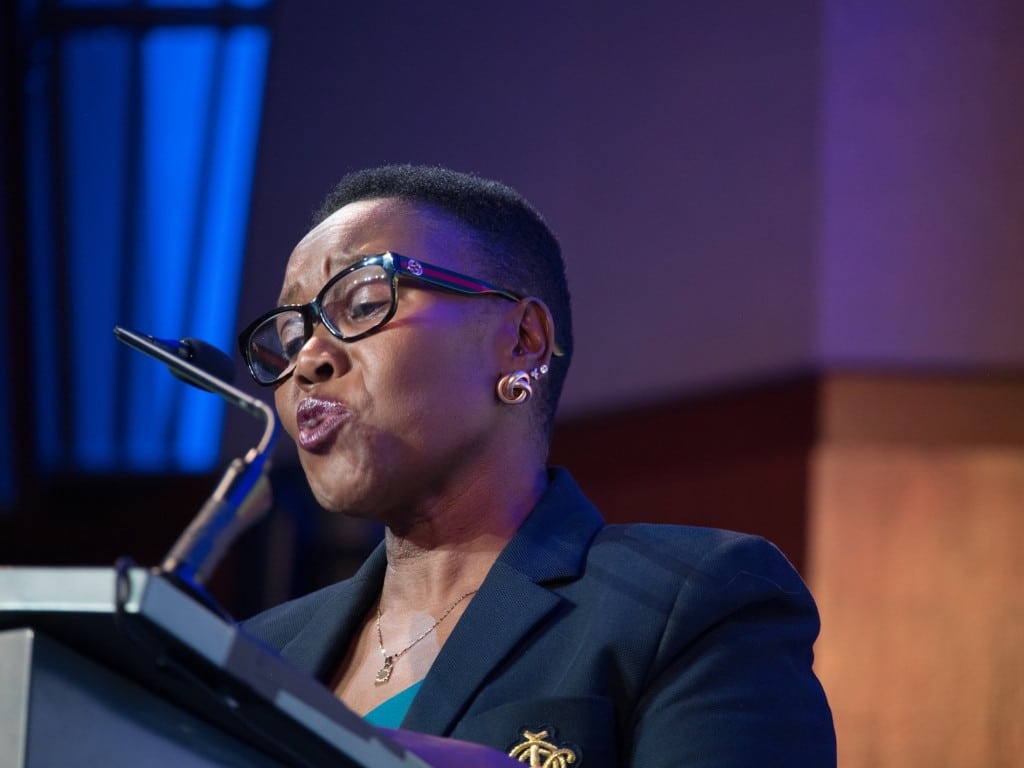
“How can we unite as a community to take on this complex issue?” Lubwama asked. “We know we cannot do this on our own, and nobody in our community can do this on their own. But we want to invite everyone who wants this place to be a better place, to envision what Kalamazoo can be, what the future for our community can be for all residents.”
KZCF Chief Community Impact Officer Alyssa Stewart told the group that when it comes to housing, “There are a lot of different moving parts that rely on each other and that need to be accounted for and tended to for everything to work.” She said housing can be thought of as a continuum from those living unsheltered in cars and encampments through market-rate housing.
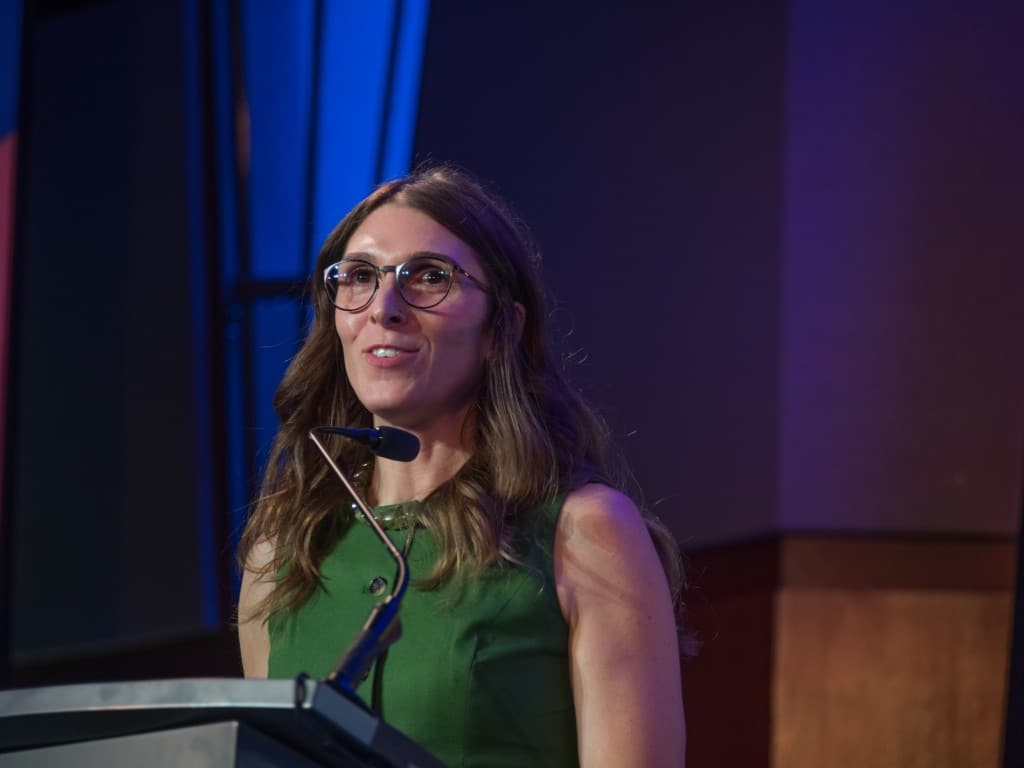
“Every part of that continuum depends on the others. When there aren’t enough affordable units, people stay in shelters longer. When shelters are full, more people end up unsheltered. And when rising costs push a family out of a home they could once afford, they may slide back down that continuum. If any part of this is broken, the whole system struggles. And so does our entire community. Right now, here in Kalamazoo and across the country, many parts of this continuum are broken, and it’s being felt.”
The good news is, “We have amazing partners, many of whom are in this room, who are working tirelessly to stabilize every part of this continuum,” Stewart said. She went on to describe work being done.
The Community Foundation, with its partners, has made financial contributions that reach across the continuum, including housing-focused loans and grants totaling more than $9 million. It supported 25 organizations and four affordable housing developments. And KZCF staff serve on the Kalamazoo Continuum of Care Board, Southwest Michigan Regional Housing Partnerships, and in similar groups where efforts are being made to change the systems leading to the breakdowns that contribute to homelessness.
“We are supporting overnight and day shelter for people who need safety today. Transitional and permanent housing programs that provide a path to stability, home maintenance, and eviction prevention that helps people stay safely in the homes they have, and the creation of affordable housing that expands options for the long term.”
WMed Street Program: “Our Kalamazoo”
Stewart went on to describe an exhibit of photography and words from local homeless individuals gathered by the WMed Street Program, which delivers direct, open-air primary and acute medical care to unhoused and unsheltered individuals in Kalamazoo. The program, which began in 2021, uses an interdisciplinary team that includes physicians, nurses, social workers, and pharmacists. They travel the community in a custom Ford Transit clinic van to conduct over 1,500 clinical visits annually.
This exhibit titled “Our Kalamazoo” was created by community members who have spent at least part of their life unhoused. KZCF presented the exhibit, Stewart said, as a reminder of “the dignity and humanity of every one of our neighbors.”
Hard work, low pay
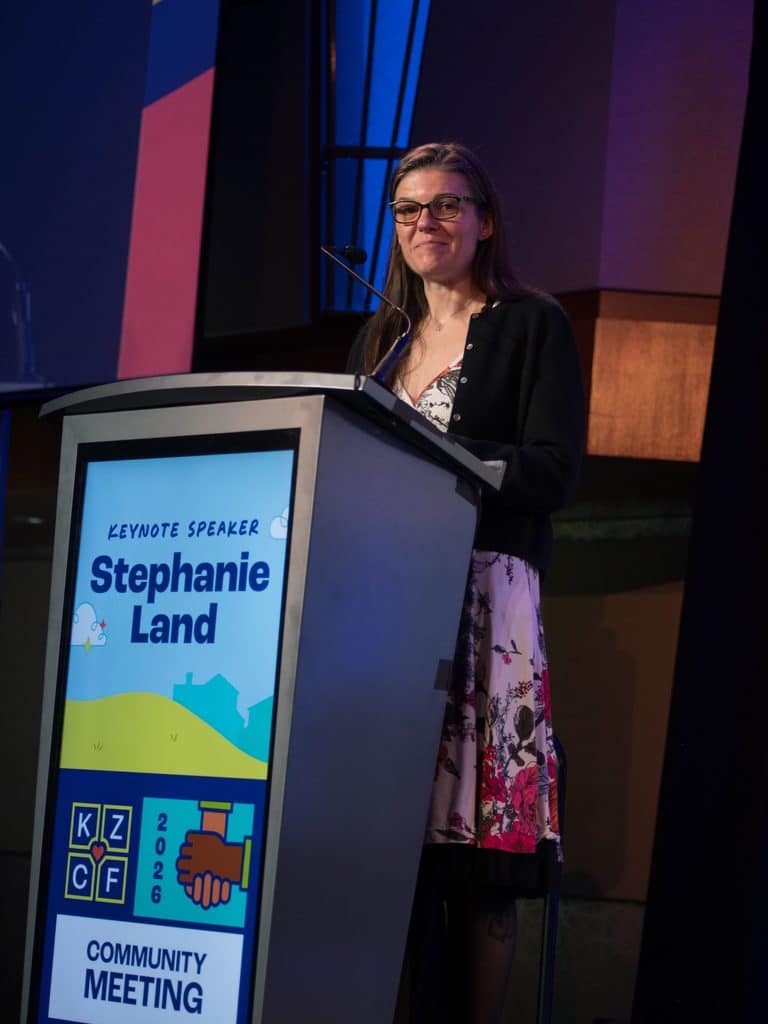
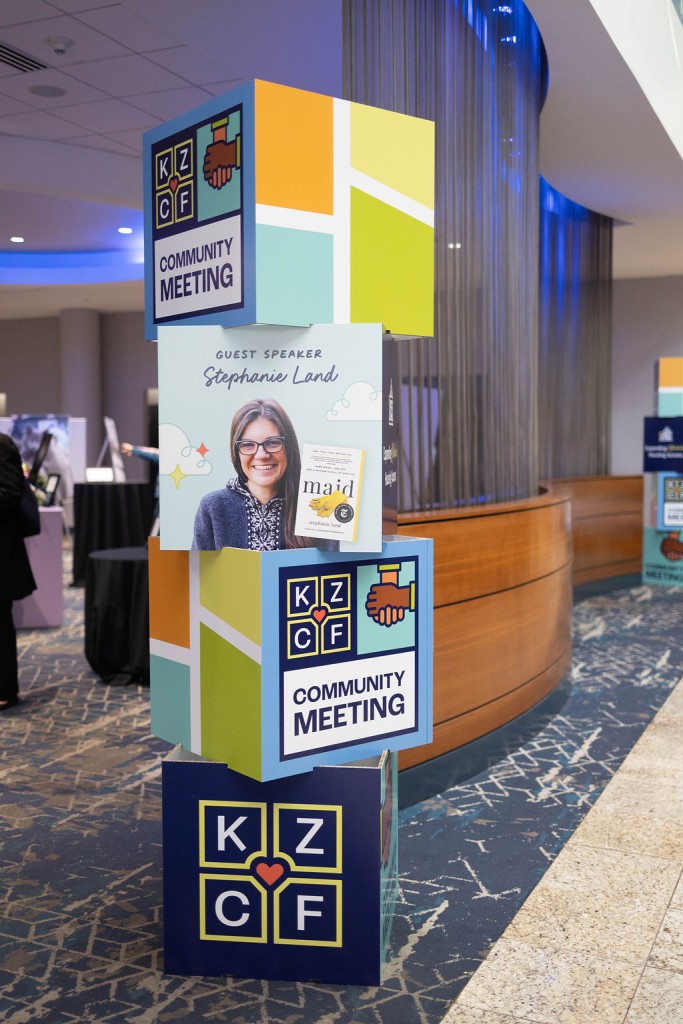
The evening continued as KZCF Chief People & Public Affairs Officer Demetrias Wolverton introduced the evening’s keynote speaker, Stephanie Land, whose New York Times bestseller novel, “Maid, Hard Work, Low Pay, and A Mother’s Will to Survive,” tells the saga of a single mom navigating the bureaucracy and nightmare of living below the poverty line.
“Because of the book’s success, it was adapted as the Netflix series ‘Maid’, which was Emmy-nominated and reached over 67 million households, making it one of Netflix’s most-watched limited series ever,” Wolverton said. “With over half a million copies in print, ‘Maid’ was praised by President Obama as an unflinching look at America’s class divide.”
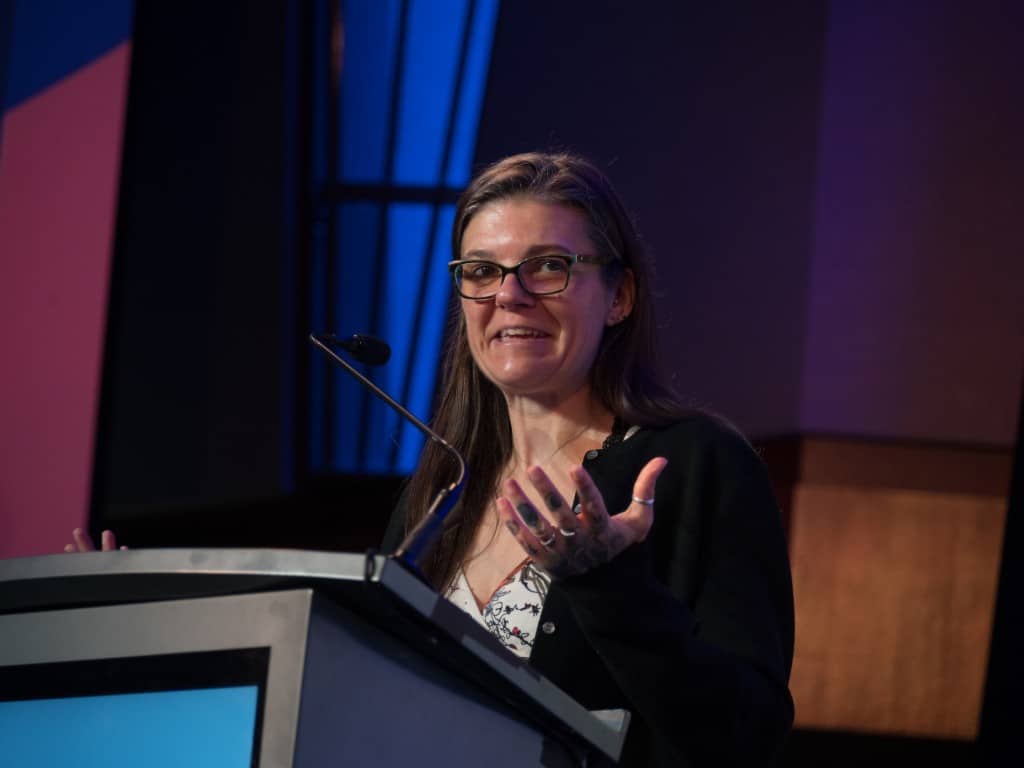
Land took the stage and opened the world of poverty to those who might never have seen it beyond the pages of her book. A flight from domestic violence, no family support, and few job skills started Land on a journey she never expected to make. She went from her daughter taking her first steps in a homeless shelter, to moving 13 times before reaching housing stability, to experiencing the importance of obtaining low-income housing in maintaining that stability. Ultimately, Land made it out. Now she speaks for those who still labor in poverty and encourages others to listen to their stories, to understand the reality of not being paid enough to eat and pay the rent.
For those assembled in the Radisson ballroom, she described the barriers to survival, the obstacles that getting a little ahead created, the emotional toll of dealing with the assumptions of those with fixed opinions of those who judge the poor, and the constant fear that her two children would be taken away.
‘The rent always eats first’
“No matter how hard I worked, it never felt like it was enough — or that I was enough,” Land said. And she told the audience what it felt like to be invisible.
No one witnessed her life as she worked all day to polish another’s existence “so that theirs could appear perfect.” And this is the reality for millions of workers in America struggling to survive on low wages, she said. “There is a myth in this country that if you work hard and pull yourself up by the bootstraps, you’re going to make it. Those who believe that myth, they also believe that if you’re not making it, well, then you’re just simply not working hard enough. But the math just doesn’t add up. Estimates say a single parent would need to make at least $30 an hour just to make ends meet or work 220 hours a week at a minimum wage job.
“I relied on government assistance to survive — child care grants, food stamps, Medicaid, utility assistance, and even a $10 voucher for gas were absolutely necessary and made it possible to use my limited income for rent — because the rent always eats first. There were days in the month, before the food stamp money was replenished, that I went to bed hungry or ate very little. After paying bills, I often had no more than $20 left for the whole month.”
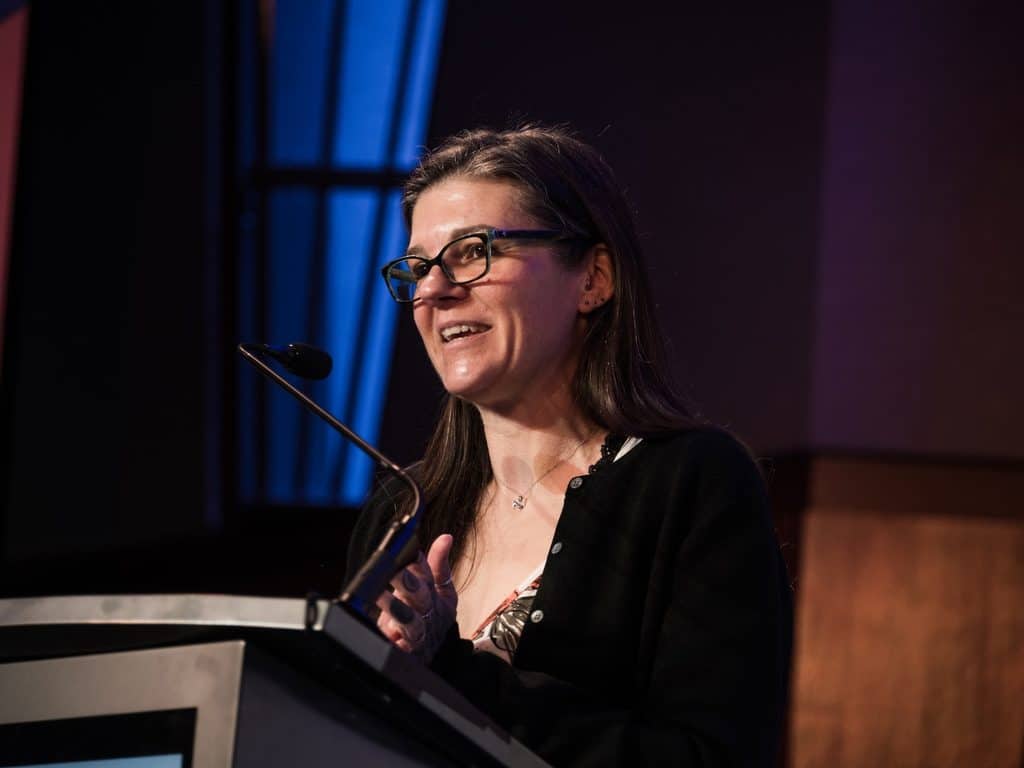
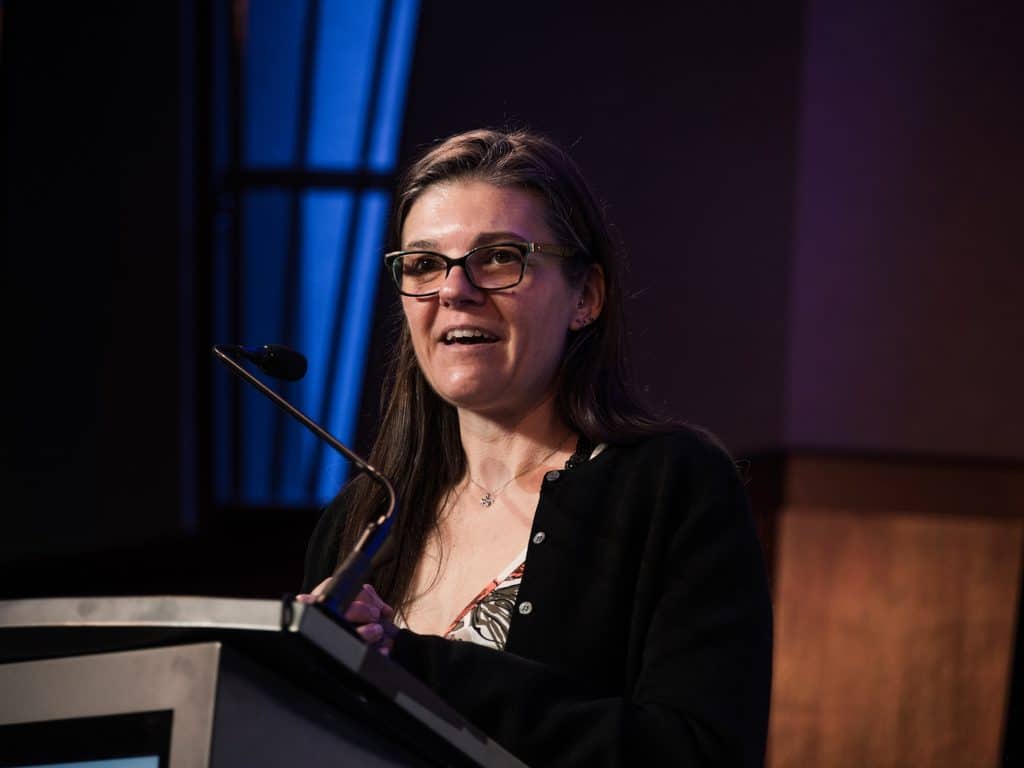
Her car’s reliability was vital, since a broken hose or a faulty thermostat or even a flat tire could plunge her family back into homelessness.
Meanwhile, the attitudes she faced left scars. “For those who turn to the government for support, there is an air of mistrust and judgment,” Land said. “The stigma surrounding those who use safety net programs is that those people just don’t want to work,” she said. But to apply for government assistance, she said she had to constantly prove that she was physically working at a real job, was not “somehow squirreling away money,” or driving a nice vehicle. “Even a 50-cent pay increase could mean that I would no longer qualify for things like child care or food to feed my child.
“And the aid application process alone seemed designed to discourage people from even trying. Paperwork was often dozens of pages thick and required access to a computer with internet and a printer. Little things like mandatory appointments with caseworkers in the middle of the workday could present an impossible hurdle.”
Her decision to go to school while she was working came with its own set of roadblocks.
“As a full-time student who was working about 15 hours a week with a child who was now over six years old, I was denied food stamps. I saw it as being punished for fighting to better our lives and my ability to support my family.
“But the truth is that for those who live in the margins, working day and night to survive, there is no real path out of poverty. They can say that the benefit cliff is too high, or the obstacles are simply too great, and the system is too broken, but I argue that the system is working exactly how it’s supposed to.”
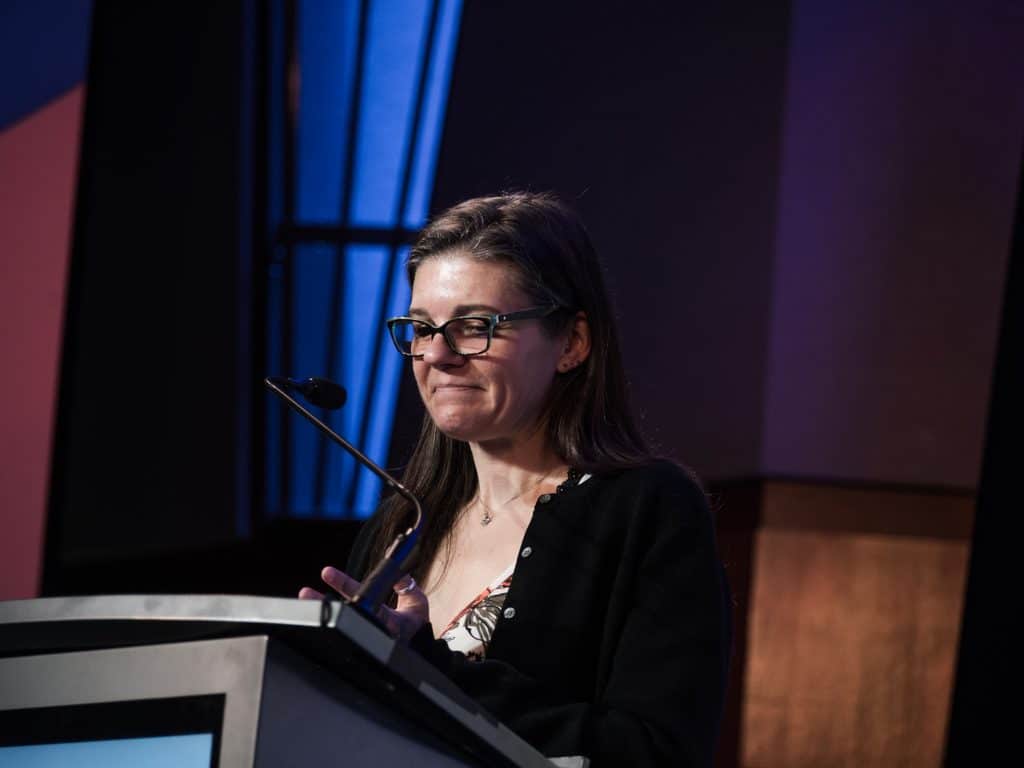
She wrote the book in the hope that it would change the stigmas that surround single mothers, especially the ones who live in poverty: “The stigmas that say we somehow deserve hardship because of all of these terrible decisions that we made to get us there. I hoped that people would see just how hard we work to make ends meet and how fiercely we love our kids. How much we struggle to be enough, while the government scolds us, telling us that we’re becoming dependent on things that they call handouts, but we call means to survive.”
For change to come about in the United States, it will take gatherings like the one presented by the Kalamazoo Community Foundation, where people listen to those who have experienced systemic poverty and racism, Land said.
“If we can somehow start to remove shame from struggle, we’ll see how many of us are fighting in our own way and create a movement toward empathy.
“Our dignity as humans does not reside in our success or how many hours we are able to work. Our dignity is being alive and caring for each other and recognizing that we are all equals who all deserve the same opportunities, while realizing that many will not have those chances towards success at all.”
Though she said she was honored to be invited to speak, she encouraged the gathering to listen to those experiencing homelessness locally. “We need to stop and talk to those who are currently experiencing homelessness instead of just ignoring them, and find out what it is that they need. They are the experts in what they need. By listening to others’ stories, we will evoke empathy and inspire compassion.”
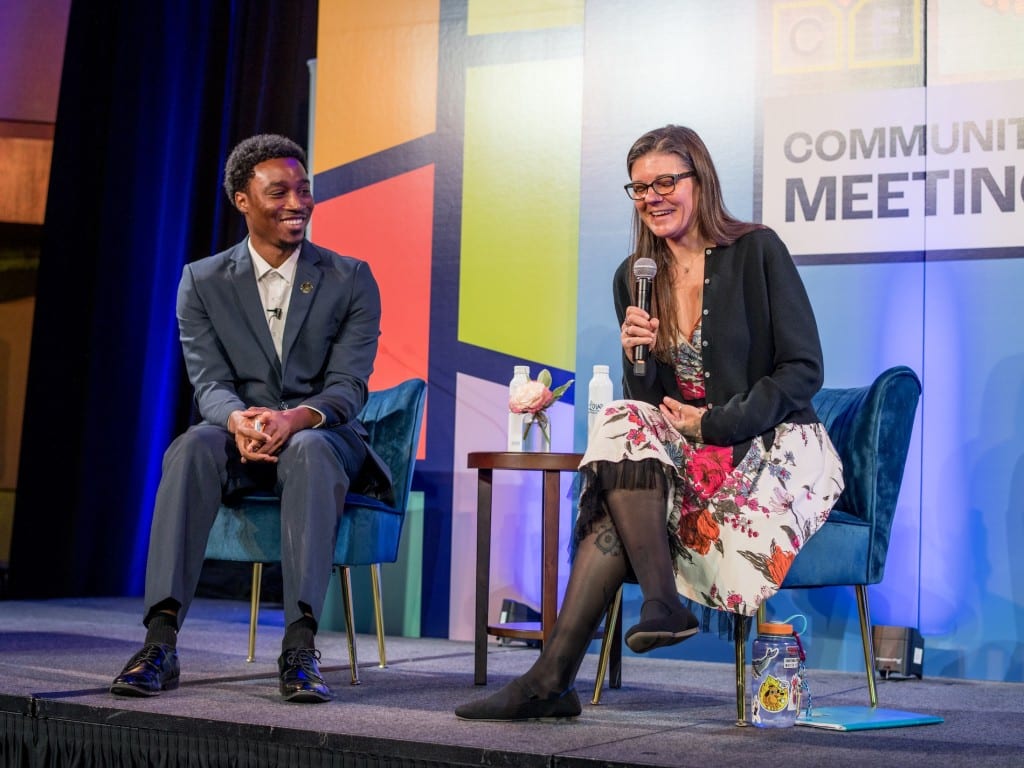
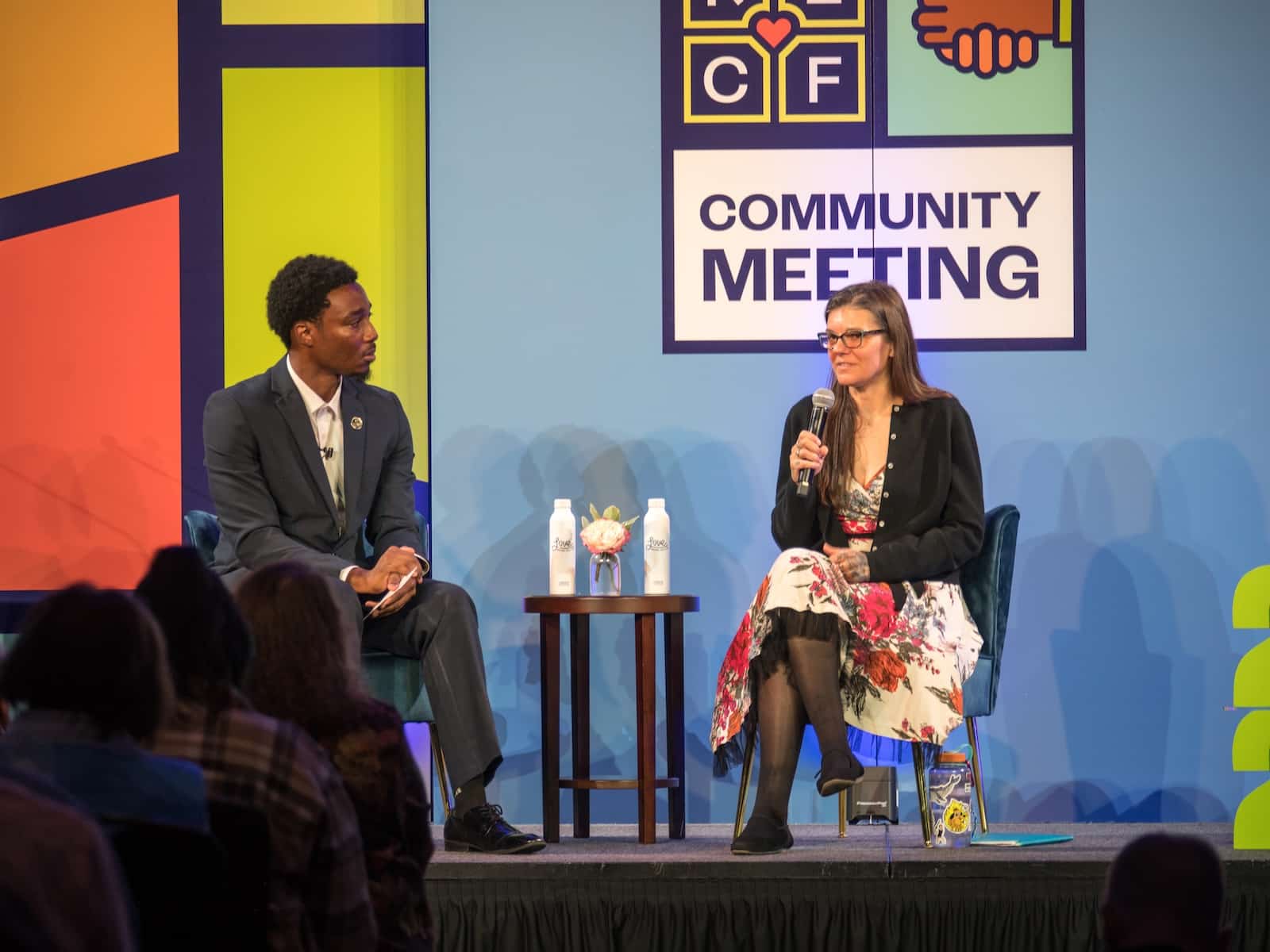
The evening continued with what was described as a Fireside Chat, led by Phil Lewis, Deputy Editor at Huffington Post, President of the Washington Association of Black Journalists, and 2025 Ebony Magazine Power 100 list, among other accomplishments. Lewis told the audience he had flown into Detroit from Washington, D.C., and immediately knew he was home thanks to the ongoing construction.
The myth of the ‘deserving poor’
As part of the Q&A session, Lewis asked where there were moments along the way that could have helped keep Stephanie and her daughters housed.
“I’ve been asked a lot of times, ‘So what was your lucky break?'” Land said. “What was the thing that allowed you to work full-time on being a writer, I guess. And it was because I got an apartment in low-income housing.” The rent didn’t fluctuate based on her income, and she didn’t have to document her income each month as she had previously while living in transitional housing. “I was constantly having to do accounting, you know, while I was in transitional housing, and that’s pretty degrading or dehumanizing to have to prove to someone every single month that you still deserve what they’re offering you.”

The low-income housing, offered by the Missoula Housing Authority, had no recertification process, a fixed rent payment, and each payment she made helped boost her credit score.
“It was only $423 a month, and it was tiny. But, you know, once I had that, it was just like so much left my body, things that I was constantly worrying about, because I knew that our housing was secure for the time being. And that part of it was just amazing to me.”
Phil: We tend to treat affordability as the finish line. But in “Maid,” some of the places that you could afford came with a real risk to you and your daughter’s health. How do we make sure that safe doesn’t get traded away to reach affordable?
Stephanie: In all of these conversations, we’re asking about what people deserve. I mean, you know, just because I don’t have enough money because I’m not getting paid enough at the two jobs that I’m working doesn’t mean that I should only have access to a 500-square-foot studio apartment that’s falling apart and has mold in the walls. The only thing that was missing from that whole equation was that I wasn’t getting paid enough money for the work that I was doing. I didn’t have any benefits. I didn’t have any sick days. And so, you know, when I was looking for places, that was what we could afford. And that was also why we were moving all the time, which is incredibly expensive, too, coming up with a first, last, and deposit, and then moving costs and all the time that goes into that. I think everybody is deserving of a safe home to live in. That should be the norm, but we’re still fighting for affordability.”
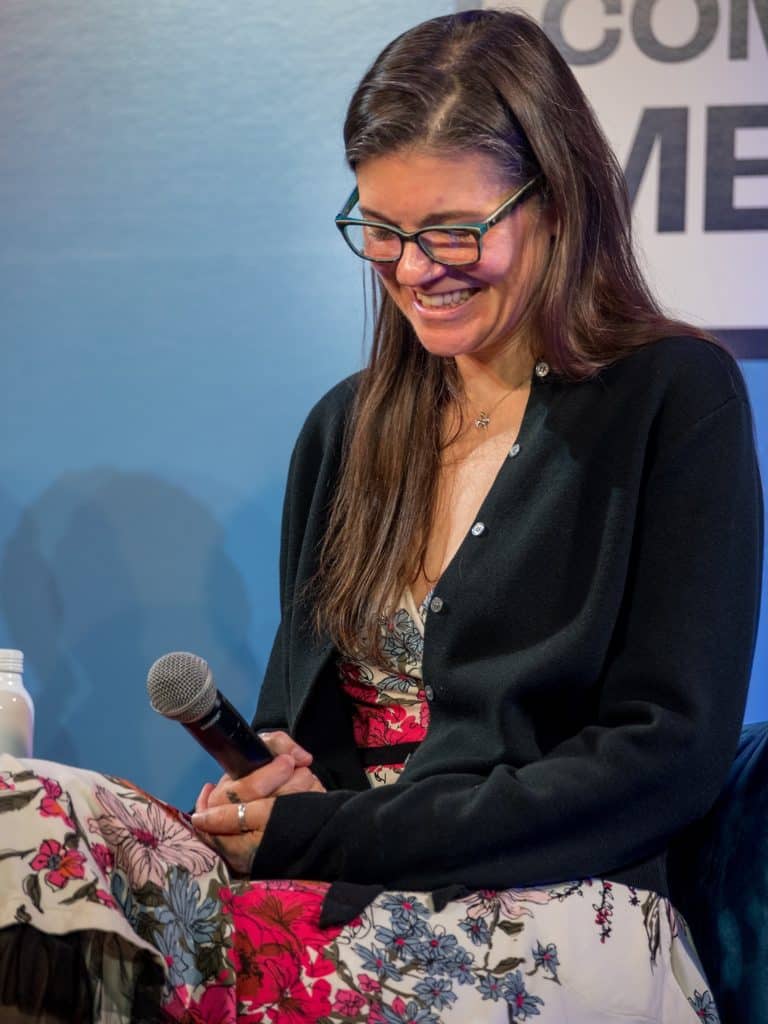
Phil: So there’s this idea of the deserving poor, right, and the deserving poor refers to people who are poor because, through no fault of their own, something happened to them, and because that thing happened to them they are deserving of charity, right? Or they’re deserving of your sympathy. How has the idea of the deserving poor shaped how people receive your story? And what can organizations do to challenge narratives that place responsibility on individuals rather than the systems and conditions that shape their lives?
Stephanie: “When I give my longer keynotes, I say coming right out of the gate that I’m standing on the stage because I look like most of the people in the audience, because you see yourself in me. And that was unusual, to have a white person talking about working as a maid and being in poverty. So I try to talk about that as much as possible and just really focus on how important it is to not assume that some people need help and others don’t. Ask your neighbors if they need help. Ask someone who you might not expect to need help if they need anything.
“I think the most powerful conversations happen when we don’t just assume that everything is fine. I think most of us are struggling in our own way. It’s been an interesting seven or eight years of talking to audiences, and some days I do just make it my main goal to make as many white people as uncomfortable as possible. So I’m not gonna apologize if I’ve done that.

“But you know, I think we need to maybe get over ourselves a little bit and just realize that the issues that the country is facing are affecting all of us, and it’s going to affect us so much more if we don’t really start doing something to lift people up and to support people.”
Chair of the Community Foundation Board of Trustees Amy Upjohn wrapped up the evening by telling those in the audience how they can address the concerns raised.
“We ask you to be a part of the solution,” Upjohn said. “How can you help? Use KZCF as a resource and have a conversation with one of our philanthropic advisors about how you can make a difference. Consider making a gift to our Love Where You Live Housing Fund, which supports nonprofits working every day to address housing needs across our community. And most importantly, be a partner in expanding housing opportunities for all.
“Together, we can help make Kalamazoo County a place where everyone has a warm, safe, and affordable home to return to each night. Please take what you’ve heard tonight and let it grow into conversation, action, and continued partnership.”
To see the presentation in full, please click here.
A musical introduction
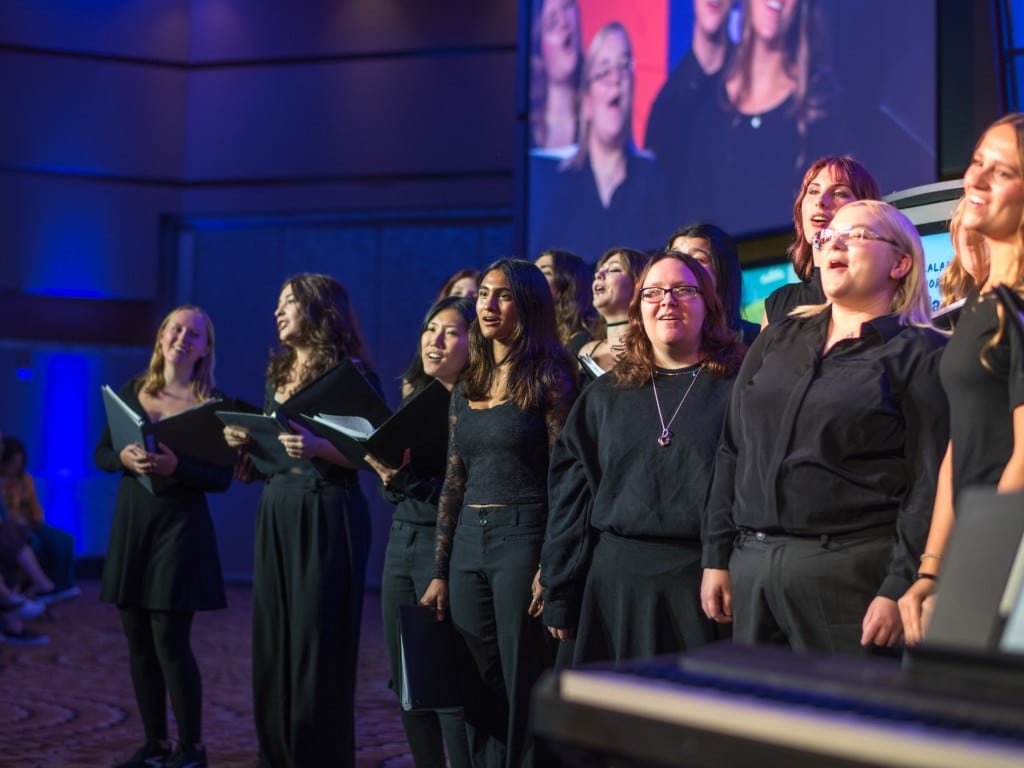
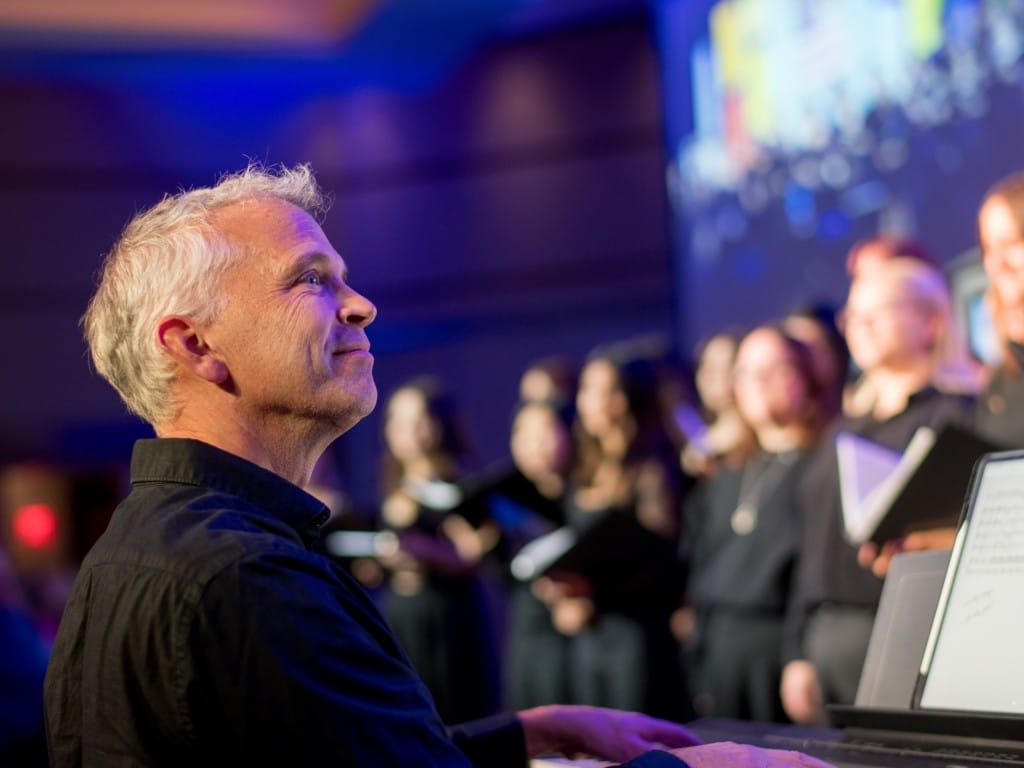
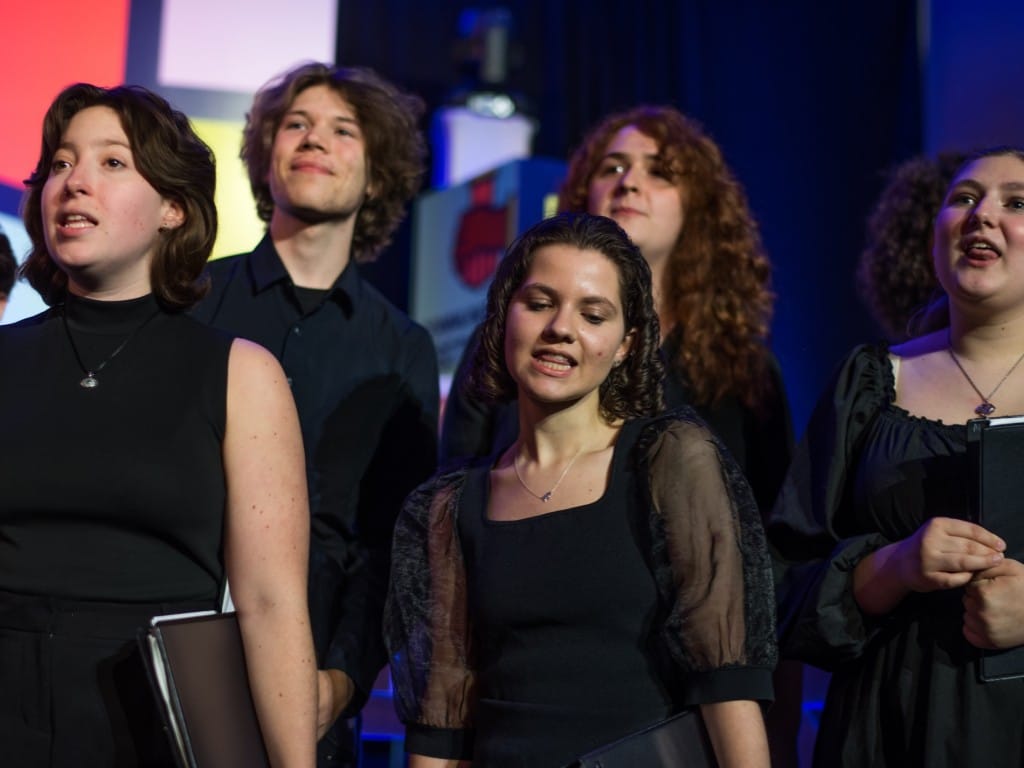
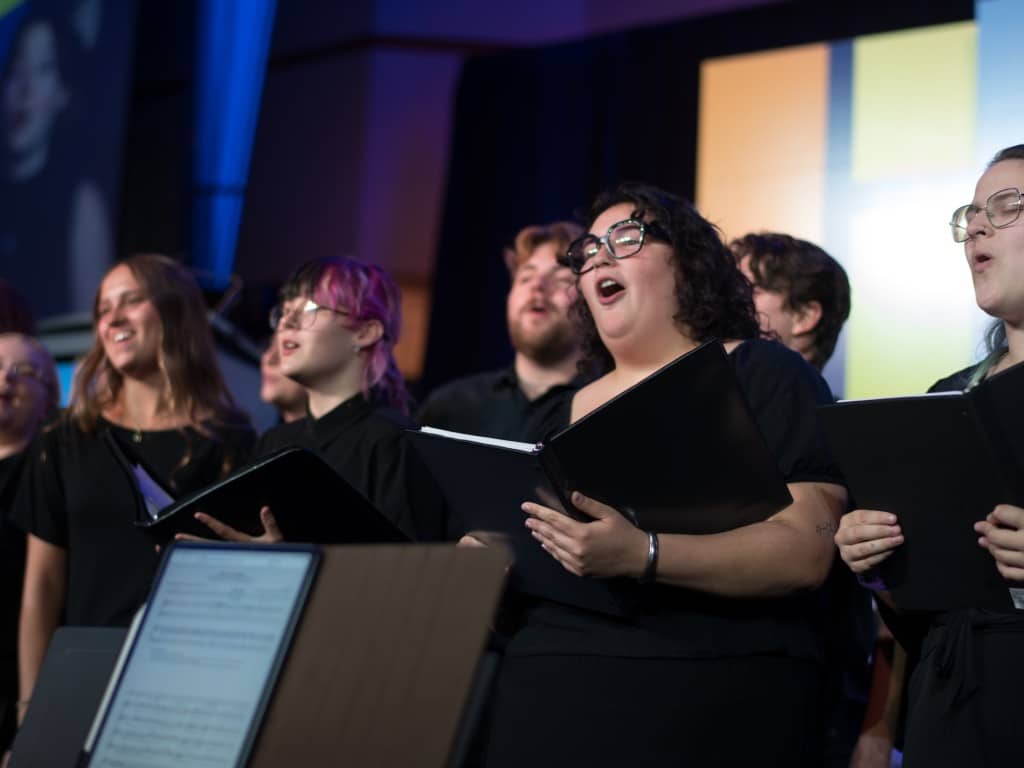
Before the serious business of untangling the interconnected threads of low pay, discrimination, racism, domestic violence, mental health needs, and limited access to services like health care and transportation that are tied up in homelessness, the evening got underway with a rousing set by the Kalamazoo College Singers. They are led by Director Chris Ludwa.


Author
Related Articles
Blue Horizon Real Estate works to be part of the solution to the affordable housing shortage
Marissa Harrington, founder of Blue Horizon Real Estate, advocates for breaking down communication silos among Kalamazoo’s housing stakeholders to address systemic barriers to affordable homeownership.
Community Land Trusts in Portage and elsewhere help residents become homeowners affordably
As the statewide housing crisis continues, communities of all sizes are looking at how to increase affordable housing options for current and future residents. In Kalamazoo County, the Portage Community Land Trust is helping residents become homeowners affordably with their new workforce housing development, Stanwood Crossings.

$10.6 million expansion of Northside housing project will add 38 more apartments
A ceremonial groundbreaking took place recently on North Pitcher Street for the expansion of the Zone 32 residential and commercial complex.