Jazz went fearless, strange, and brilliant at the Gilmore Finale — and Kalamazoo loved it
At the Gilmore Piano Festival finale in Kalamazoo, Grammy-winning pianist Sullivan Fortner and fellow jazz innovators delivered a daring, emotionally charged performance that proved the city’s audience is sophisticated enough to embrace adventurous modern jazz.
Maybe Kalamazoo is cooler than some think.
Of course, we know our Aeschylus (Greek playwright of “Agamemnon,” duh). We have a world-class concert hall, Chenery Auditorium, that’s also a school auditorium, where young Abbey Lincoln attended high school.
We have the Gilmore Piano Festival. Sullivan Fortner, Cécile McLorin Salvant, and Ambrose Akinmusire played the finale of the fest on May 10.
Yeah, just some of the top players taking jazz in new, mind-blowing directions, here in town. Over 1,000 with-it cats attended, most from Kalamazoo, many from elsewhere, people willing to travel to see unique out-there stuff.
We’re cool, so if a jazz pianist asks a Kalamazoo audience for requests, eventually some joker’s gonna shout out “Nuclear War,” by Afrofuturist Sun Ra or something equally out-there.
“Uh, isn’t that the one that goes…” Sullivan Fortner recites lyrics with one of the milder naughty words in Sun Ra’s nuclear protest song.
“‘Round Midnight,” someone else shouts.
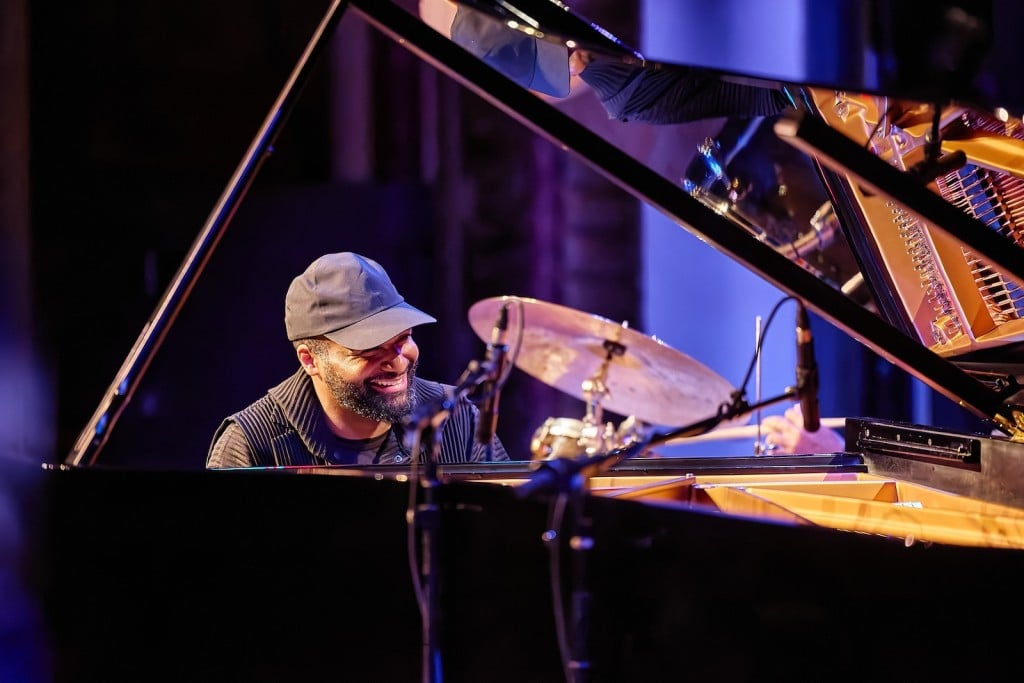
“Ok,” Fortner says, sounding relieved to be offered something safe, turning quickly to the keys.
The Thelonious Monk classic has a melody that floats in and out, recognizable by everyone. Therefore, it’s a standard that every jazz combo has to eventually cover.
But Sullivan truly made it his own and didn’t play it safe.
Larry Bell tells us after the concert that Fred Cohen, jazz scholar and owner of the New York Jazz Records Center, was in the audience. (Bell, who’s buying Cohen’s jazz book collection for the Larry J. Bell Library Foundation invited Cohen to the Gilmore.)
Cohen told him later, “‘ When he said he was going to play ”Round Midnight,’ it’s like, oh, here we go again,'” Bell quotes Cohen. “And he says, ‘then he deconstructed it and made it so intricate and complex.’ He said, ‘I never heard anything like that before.'”
This is a 70-something NYC jazz scholar. “Sullivan impressed the old cantankerous critic in Fred, so that was pretty cool,” Bell says.
First Bell Jazz Artist
We’re cool. We’re the home of the Gilmore Piano Festival. We’re where Bell started Bell’s Brewery.
The sale of a few bottles brewed in Kalamazoo went toward the new Larry J. Bell Jazz Artist award. Eight million is going toward a continuing search for jazz talent. Anonymous jurors go to clubs and concert halls, looking for a performer deserving a $50,000 grant plus $250,000 to be used over four years.
Fortner is the first Bell award-winner.
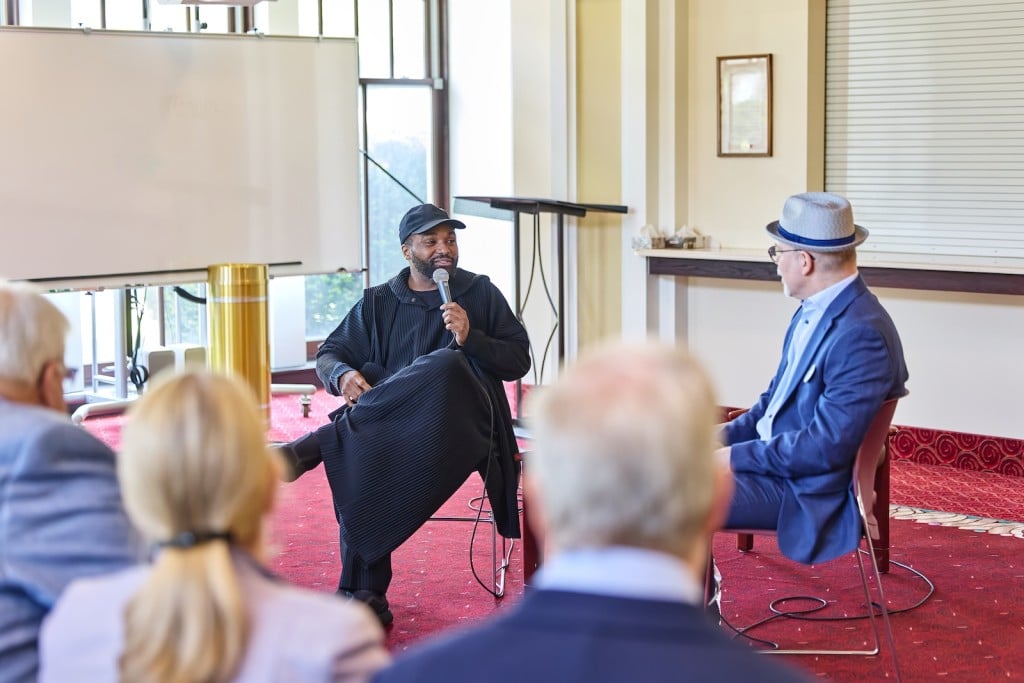
Last year in March, his agent told him to be sure to dress up when he got to Atlanta to perform, Fortner says during a pre-concert talk.
“But I have a sound check,” Fortner told his agent.
His agent told him, “They’ll move the sound check, just do what you’re told.”
In Atlanta, Fortner was ambushed by people, including big names from Steinway, XM Radio jazz host Mark Ruffin, and some guy named Larry.
“And Larry grabs my hand, I’m like, ‘What the huh?’ He says, ‘My name is Larry J. Bell, and….'”
Fortner had no idea about the award, the Gilmore, or Kalamazoo. They explained to him, “‘You win this amount of money over a four-year period, and you do what you want, artistically.’ I was like, ” Wow,” Fortner says.
He realized, “These types of opportunities allow you the privilege to be a little bit more picky with the type of gigs that you play, the type of venues that you play, and how often you play.” He could take some time off, write, and develop his music.
This year, Fortner won another award, the 2026 Grammy for Best Jazz Instrumental Album, for his “Southern Nights.”
He was born in New Orleans 39 years ago, studied music at Oberlin and the Manhattan School of Music, then became a sideman for Roy Hargrove and others.
As a working jazz pianist, Fortner realized at some point that the “fun aspect of music” had somehow gotten lost “for a very long time.”
Starting with his 2023 album “Solo Game,” where he plays all the instruments, piano to celesta, he’s been reminding himself “of that play aspect, and that it’s okay to make mistakes and to get messy. And it’s like, there’s no real right or wrong in anything, because it’s just art.”
“Messy”
“Messy” isn’t quite the right word for Fortner’s performance at Chenery. It’s definitely playful for him, but he knows what he’s doing, he knows where he’s going, and how to get there. His fingers might romp off down the keys and back, but they don’t make a mess.
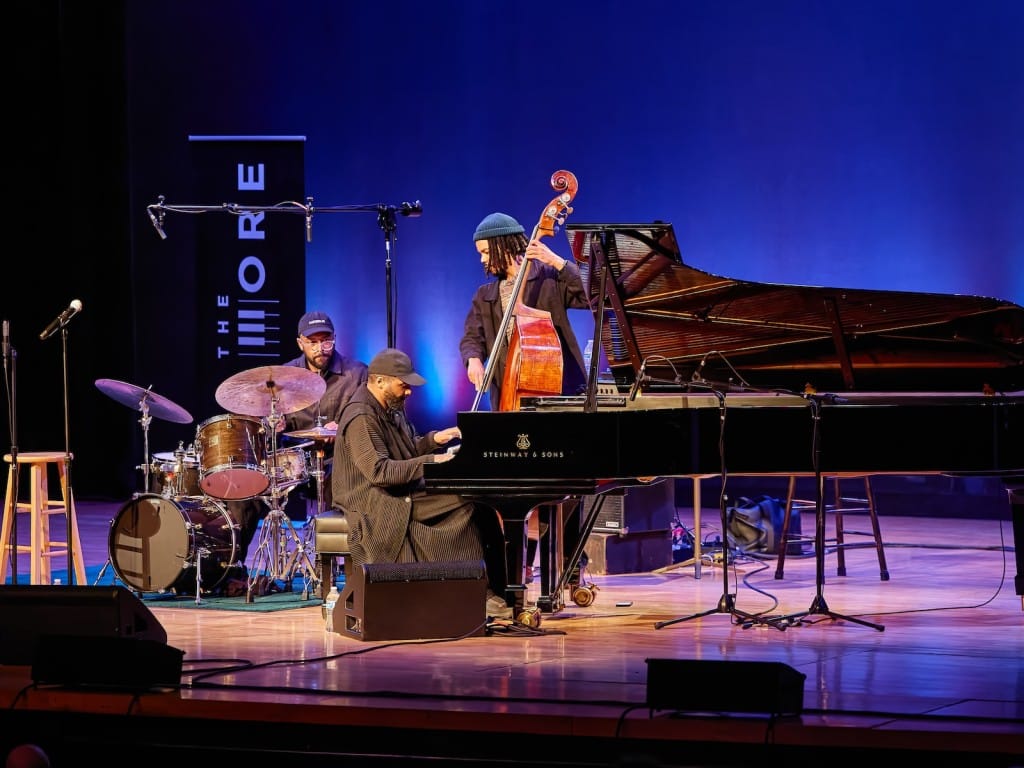
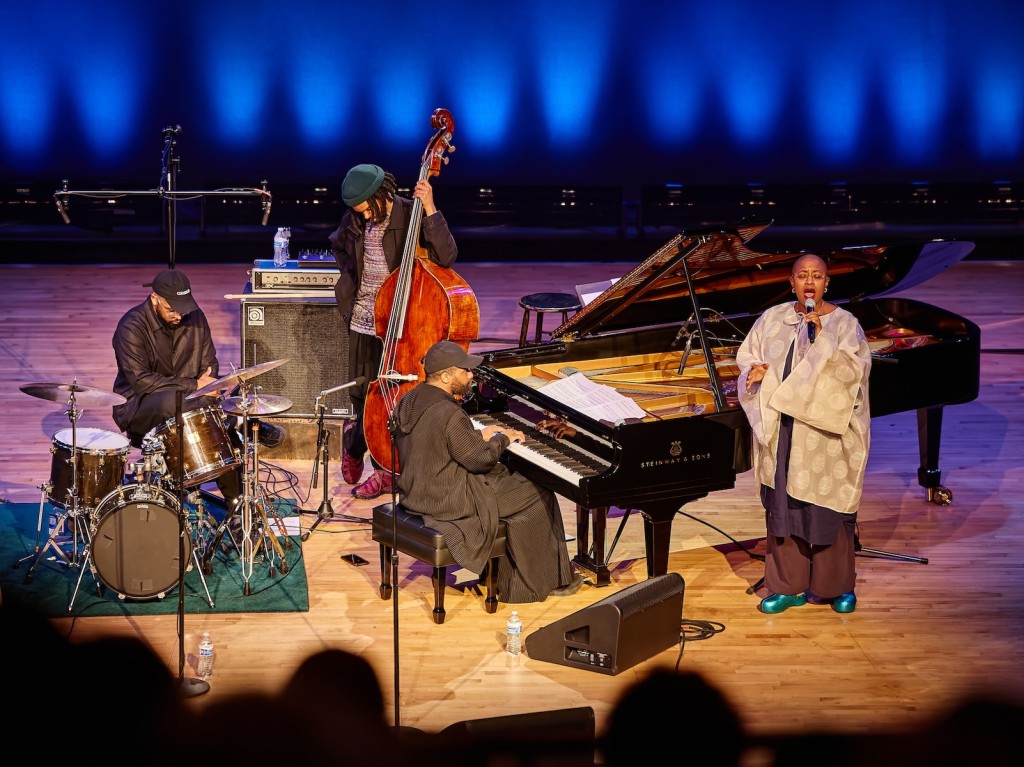
He keeps his trio close together on stage, just a few feet apart. Tyrone Allen (bass) and Kayvon Gordon (drums) were intensely focused on Fortner and followed along tightly.
They were in conversation, just among themselves, and we were allowed to listen in.
I’m not sure if it was a stumble, an unexpected whim taking his fingers in a new direction, or anything the untrained audience wouldn’t catch, but at one point, Fortner turned to the two, shrugged, and smiled. Allen and Gordon returned with looks like they’re saying, “Yeah, whatever.” All without stopping or stumbling in the rolling improvisation.
Most small jazz groups follow a formula, a pattern of leader plays, drummer or bassist gets a solo, leader plays some more, another solo, etc. Gordon and Allen soloed a couple of times, but the set had them together as an organic unit — again, in conversation.
Fortner took them and the audience into lush romance, bluesy melodies, fractured and reconstructed 1930’s Earl Hines-ness, post-war bop-isms, tense modernity, and a lot of intense and daring improvisational runs. He was having fun; it was play for him, but that play on a foundation of real talent put Fortner’s music into mind-blowing territory.
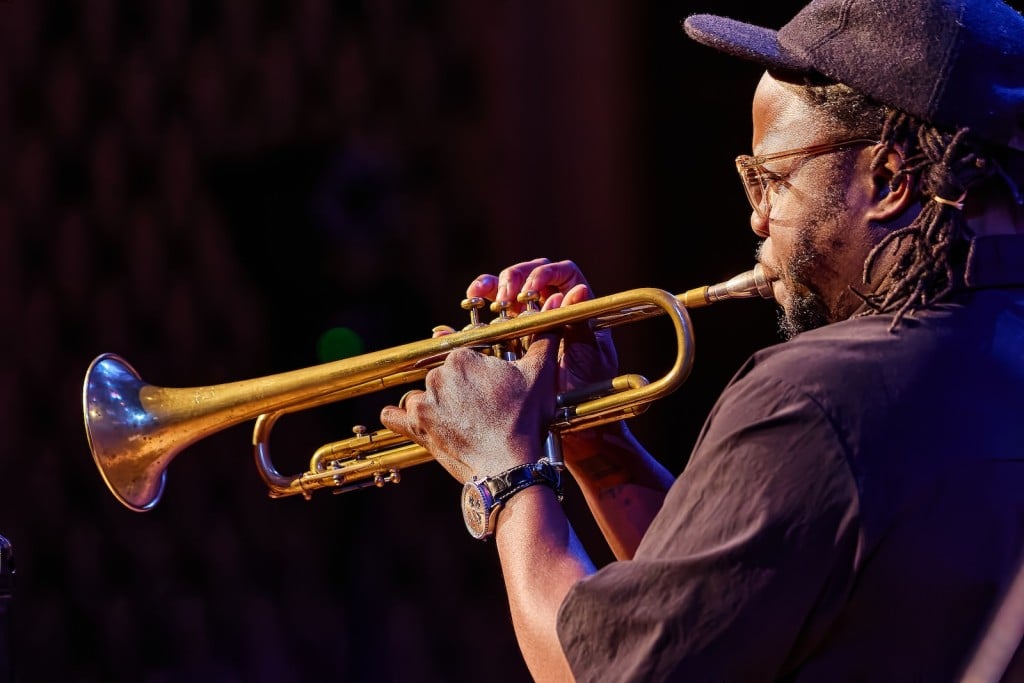
The trio was just half the show. To start the second half, Fortner brought out Akinmusire, a Grammy-nominated avant-garde trumpeter.
Akinmusire played his “Weighted Corners.” It starts with a hint of the old song “Smile”— “Smile, though your heart is aching…” — Akinmusire took that melancholy tune and made it into something that hurt.
One doesn’t often hear what sounds like true emotional pain coming from an instrument. Barely audible sounds became choked squeals from his horn. The vulnerable sounds became more stable, then turned strong and defiant, helped along with an energetic back-and-forth discussion with a therapist, Fortner. It was a journey through emotional transformation, reaching that back-on-one’s-feet moment, that started from a maybe-he-needs-a-wellness-check mood.
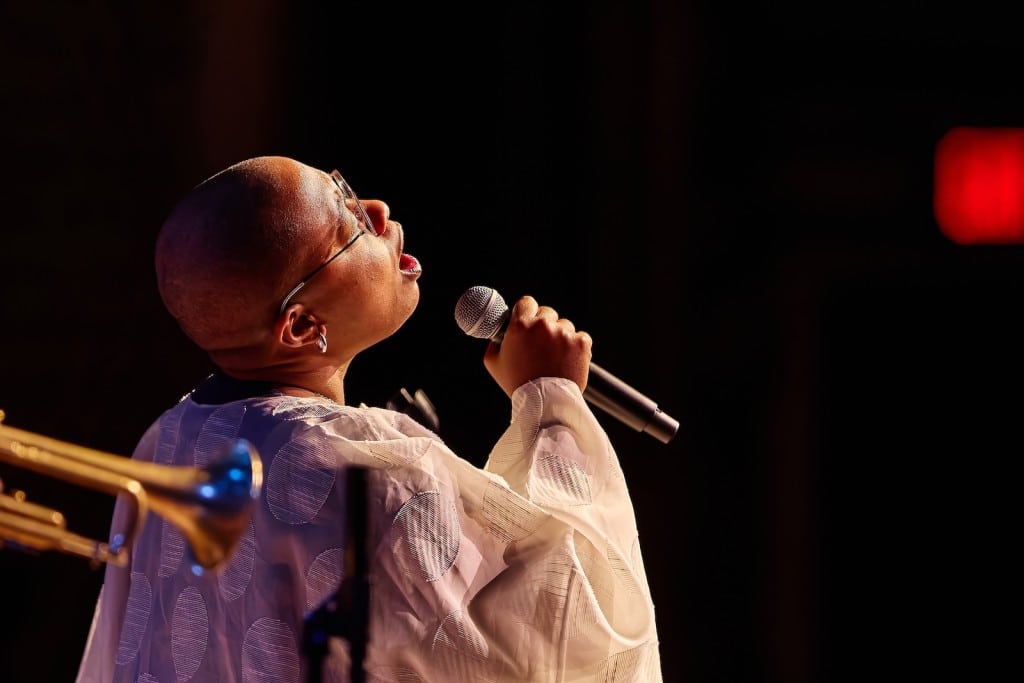
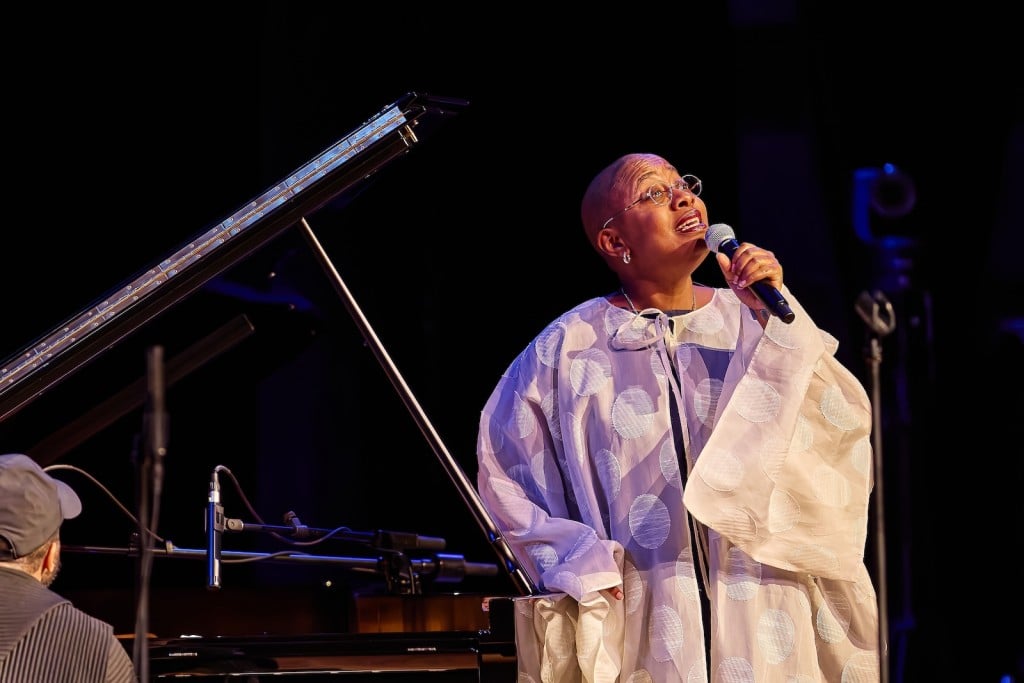
Then Salvant, Grammy-award-winning jazz vocalist, came out to pay tribute to the space that a young Abbey Lincoln occupied. She sang Lincoln’s “Down Here Below.” Leaning against Fortner’s Steinway, her ultra-rich vocals did what the song demands: take what could be a basic song of heartbreak, sung from an individual brought down to the emotional depths, and make it into a song where people are brought down into the depths of the times.
She brought Lincoln’s old house down with that. After the applause quieted, Salvant introduced her next piece. “This song is from a Greek tragedy by Aeschylus. Does anyone know Aeschylus here?”
A handful of people clap, but strongly clap.
“That’s pretty good!”
She outlined the scene. Basically, Aeschylus’ Greek chorus sang of Agamemnon and his brother Menelaus, going off to the Trojan war.
They see two birds in the sky, conjuring visions, urging them into war.
Or, were they giving a warning about war?
She heard a BBC theater production where Harrison Birtwistle set the old Greek chorus to music. “I just thought it was so beautiful, and so eerie, and so of-the-future and of-the-past.”
So she did her own version of “Blackwing and Silver Hue.” Birds delivering prophecy to kings have never been so haunting. She turned fierce on the Chenery stage, singing how “everybody saw the tearing talon, ran with GORE,” and received horrible visions of a pregnant hare ripped apart.
Fortner’s trio and Akinmusire took the visions into a chaotic jazz realm, not too violent, more like sorrow with a few dying screams from the trumpet.
Salvant took it to the climactic end — but the war prophecy was not over. With a sharp spoken word recital, she says, “Batter. Batter the doom-drum. But believe there’ll be better!”
She repeats it with the musicians. They repeat it until all of Chenery says it with her. She then yells it. “BATTER! BATTER THE DOOM-DRUM….” She repeats, the audience repeats. “BUT BELIEVE THERE’LL BE BETTER!” It became a communal experience that fit with how 2026 seems to be progressing.
Kalamazoo is sophisticated
And there was the big standing ovation, and Fortner came back out to ask for requests. He did his inventive take on “‘Round Midnight.”
And here’s where I say again, after another festival year, how lucky we are in Kalamazoo to have the Gilmore bring such unique talent to perform in our town.
During Bell’s comments afterward, he tells us about what Fortner told him after the concert.
Bell says, “I hold my breath a little bit when he starts playing, because sometimes you don’t know how a crowd is going to react.”
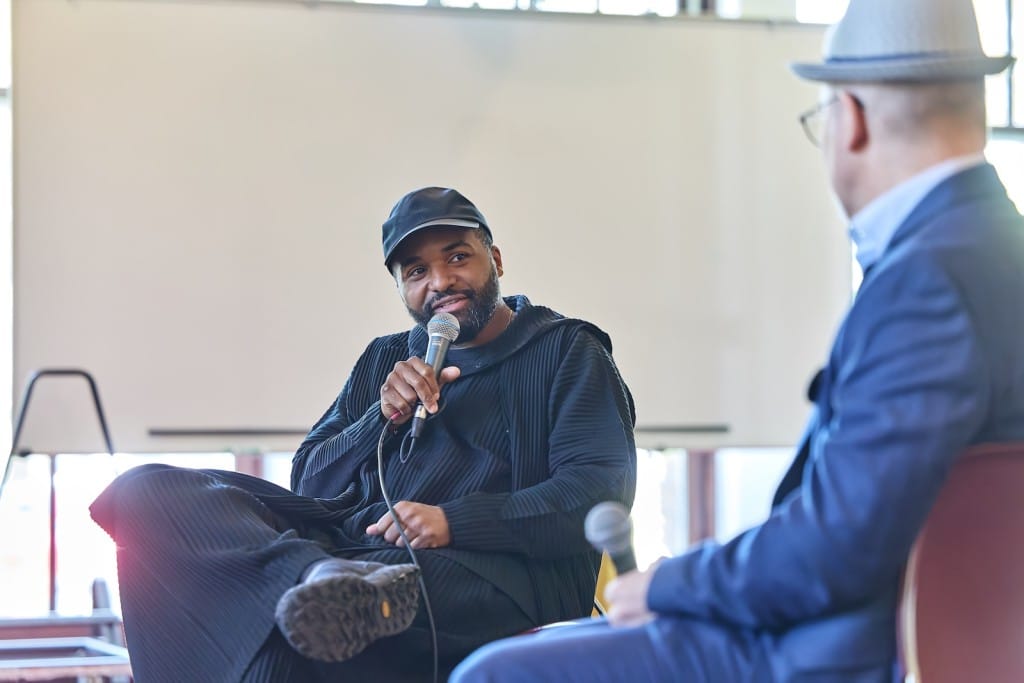
But Fortner told him later, “I’m so glad we get to come here and just, you know, play our stuff instead of just having people say, ‘play something we know,’ or just playing show tunes. We actually get to stretch out, do crazy stuff, and Kalamazoo appreciates it.”
Bell continues, “And, you know, that’s just so wonderful that we have an audience here that’s sophisticated enough to go along with that.”
Did you miss the concert? The complete set is here, archived by the Gilmore Piano Festival.
See the rest of the Gilmore on their YouTube account.
Author

Related Articles
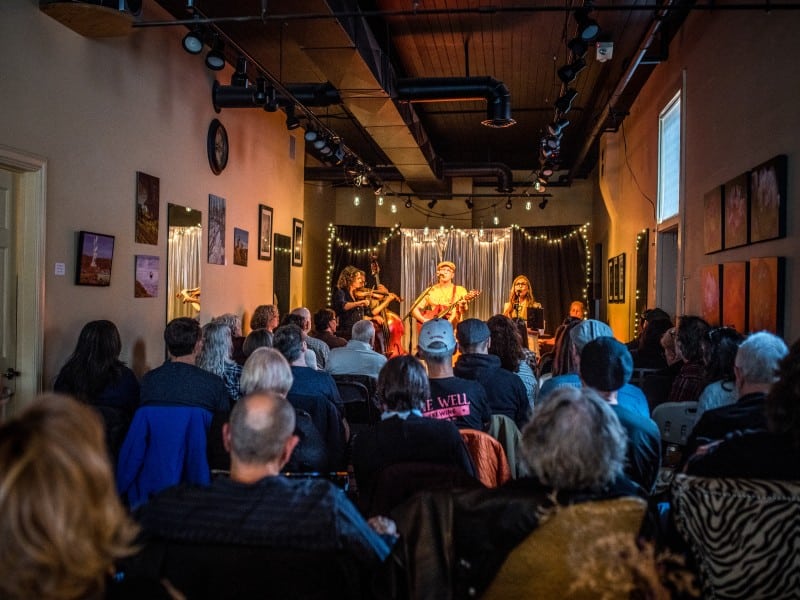
House show or hair show? Inside Kalamazoo’s ‘secret’ salon concert scene
A downtown Kalamazoo hair salon is transforming into an intimate monthly live music venue, where Trim Salon owner Patti Ann McNulty hosts folk and Americana concerts in a uniquely DIY community space.
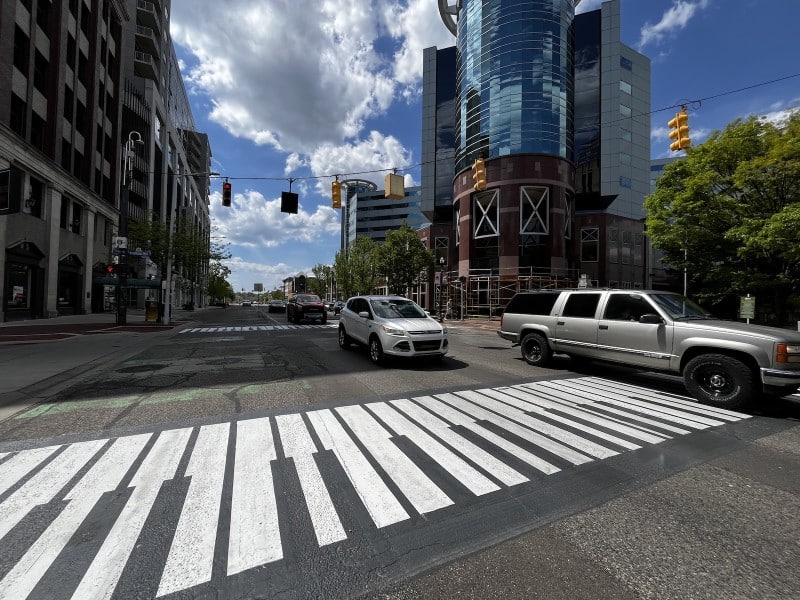
Kalamazoo asks residents to take a close, personal look at streets on walking audit for ‘Design It! Downtown’
A lively Downtown Kalamazoo walking audit highlights community-driven ideas and upcoming “Streets for All” improvements aimed at creating a safer, more welcoming, and pedestrian-friendly city center.
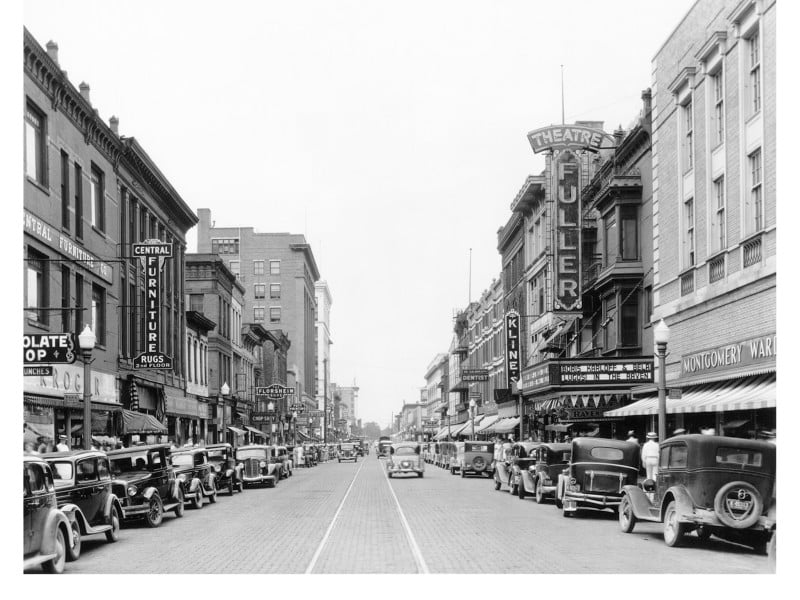
From ancestral trails to two-way roads: How Kalamazoo streets keep changing with the times
Kalamazoo’s shift from one-way to two-way streets reflects centuries of evolving transportation as the city reimagines a more walkable, people-centered downtown.